
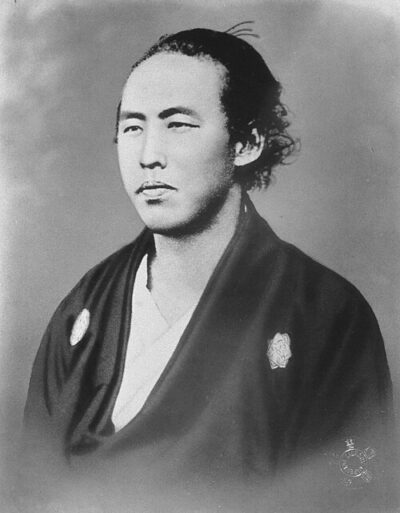
Sakamoto Ryōma
Sakamoto Ryōma was a Japanese samurai and politician. Born January 3, 1836, in Tosa Province. Died December 10, 1867, in Kyoto. Known for Senchū hassaku and Shinseifukōryō Hassaku.
Facts
24 facts · 2 confirmed by two sources · 1 cited · 20 from one source · 1 where the sources disagree
What’s different
- Name at birth: we show 坂本 直陰 (Sources disagree). Wikidata also lists 直柔
Where this comes from
Papalocal keeps its own record. It started from these sources; what each one said is kept here as it was copied, so a change on their side never changes this page by itself. Tap one to read its version.
What Wikidata says · copied November 16, 2026 · revision 2540992953
- Described as
- Japanese samurai and politician (1836–1867)
- Other names
- Sakamoto Ryouma, Sakamoto Ryoma, Saitani Umetarō, Sakamoto Naonari, Sakamoto Naokage, Jinendō
- Born
- January 3, 1836 · 2 references
- Died
- December 10, 1867 · 2 references
- Born in
- Tosa Province
- Died in
- Kyoto
- Buried in
- Ryōzen Cemetery
- Name at birth
- 坂本 直陰; 直柔
- Citizen of
- Japan
- Occupation
- politician; entrepreneur; samurai; revolutionary · 1 reference
- Political party
- Tosa kinnō-tō
- Member of
- Kaientai
- Known for
- Senchū hassaku; Shinseifukōryō Hassaku
- Spouse
- Narasaki Ryō
- Father
- Sakamoto Naotari
- Mother
- Sakamoto Kō
- Siblings
- Sakamoto Gonpei; Sakamoto Otome
- Lived in
- Edo; Kyōto; Fukuyama; Nagasaki
- Wikipedias with a page
- 43
Wikidata item Q378450 (wikidata.org/wiki/Q378450), public domain (CC0). Copied November 16, 2026.
What Wikipedia says · copied November 16, 2026 · revision 1384692511
Sakamoto Ryōma (坂本 龍馬 or 坂本 竜馬; 3 January 1836 – 10 December 1867) was a Japanese samurai, a shishi and influential figure of the Bakumatsu, and establishment of the Empire of Japan in the late Edo period.
Sakamoto was a low-ranking samurai from the Tosa Domain on Shikoku and became an active opponent of the Tokugawa Shogunate after the end of Japan's sakoku isolationist policy. Under the alias Saitani Umetarō (才谷梅太郎), he worked against the Bakufu, the government of the Tokugawa shogunate, and was often hunted by their supporters and the Shinsengumi. Sakamoto advocated for democracy, Japanese nationalism, return of power to the Imperial Court, abolition of feudalism, and moderate modernization and industrialization of Japan. Sakamoto successfully negotiated the Satchō Alliance between the powerful rival Chōshū and Satsuma domains and united them against the Bakufu. Sakamoto was assassinated in December 1867 with his companion Nakaoka Shintarō, shortly before the Boshin War and the Meiji Restoration.
- Born, in its opening lines
- January 3, 1836
- Died, in its opening lines
- December 10, 1867
From the Wikipedia article “Sakamoto Ryōma” (en.wikipedia.org/wiki/Sakamoto_Ryōma), by its contributors, under CC BY-SA 4.0 (creativecommons.org/licenses/by-sa/4.0/). Copied November 16, 2026; not changed.
Confirmed Two sources agree. Cited One source, and it names where it got it. One source One source, without a reference of its own. Sources disagree The sources disagree. We show the best-supported value and keep theirs below.
