
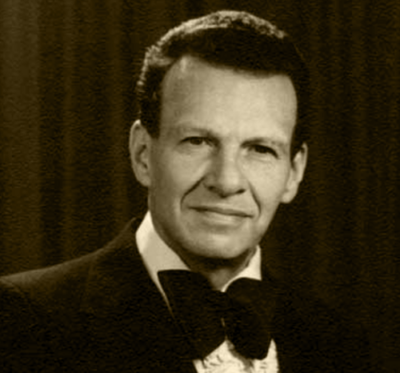
Samael Aun Weor
Samael Aun Weor was a Colombian writer. Born March 6, 1917, in Bogotá. Died December 24, 1977, in Mexico City.
Facts
11 facts · 2 confirmed by two sources · 2 cited · 7 from one source
Where this comes from
Papalocal keeps its own record. It started from these sources; what each one said is kept here as it was copied, so a change on their side never changes this page by itself. Tap one to read its version.
What Wikidata says · copied November 18, 2026 · revision 2564184823
- Described as
- Colombian writer (1917–1977)
- Other names
- Víctor Manuel Gómez Rodríguez
- Born
- March 6, 1917
- Died
- December 24, 1977
- Born in
- Bogotá
- Died in
- Mexico City · 2 references
- Name at birth
- Víctor Manuel Gómez Rodríguez
- Citizen of
- Colombia
- Occupation
- writer · 1 reference; esotericist; cult leader
- Spouse
- Arnolda Garro
- Religion
- gnosticism in modern times
- Wikipedias with a page
- 23
Wikidata item Q527908 (wikidata.org/wiki/Q527908), public domain (CC0). Copied November 18, 2026.
What Wikipedia says · copied November 18, 2026 · revision 1385170695
Samael Aun Weor (Hebrew: סמאל און ואור; March 6, 1917 – December 24, 1977), born Víctor Manuel Gómez Rodríguez, was a Colombian-Mexican occultist and author of over sixty books of esoteric spirituality. He formed a new religious movement under the banner of "Universal Gnosticism", or simply gnosis, which scholars have described as the origin of multiple neo-gnostic sects across Latin America, and taught practical and esoteric principles purported to "awaken consciousness" and fundamentally change the practitioner's psychological condition.
He first gained a following in his native Colombia before moving to Mexico in 1956, where his movement grew and his works spread among practitioners of occultism and Western esotericism and were translated into other languages. Many of his teachings draw heavily on other esotericists, in particular Gurdjieff (via Ouspensky), without acknowledging them as sources.
His writings condemn homosexuality as a path to spiritual damnation and teach that orgasm is a loss of spiritual energy. In La Transformación Social de la Humanidad (1965) he advocated the sterilization of criminals to prevent the propagation of "bad-quality seed", and classified all races as "Aryan" except the Jews. After his death the movement split into numerous independent organizations, some of which have been described as sects (sectas) by the Spanish press, cult researchers and former members, and accused of psychological manipulation, sexual control, forced labour and human trafficking; the groups reject these characterizations and deny the allegations (see § Cult allegations).
In 1948, Gómez referred to himself as the name of his being, Aun Weor, which means "the verb or messenger of God." In 1954, after undergoing a ceremony he described as the birth of "Inner Christ," he adopted the name of Samael Aun Weor, which he used until his death in 1977. Samael Aun Weor referred to his teachings as "The Doctrine of Synthesis", claiming to express the existence of the "perennial philosophy, with its highest teleological function apparently being the accomplishment of "Christification" and "Final Liberation".
- Born, in its opening lines
- March 6, 1917
- Died, in its opening lines
- December 24, 1977
From the Wikipedia article “Samael Aun Weor” (en.wikipedia.org/wiki/Samael_Aun_Weor), by its contributors, under CC BY-SA 4.0 (creativecommons.org/licenses/by-sa/4.0/). Copied November 18, 2026; not changed.
Confirmed Two sources agree. Cited One source, and it names where it got it. One source One source, without a reference of its own. Sources disagree The sources disagree. We show the best-supported value and keep theirs below.
