
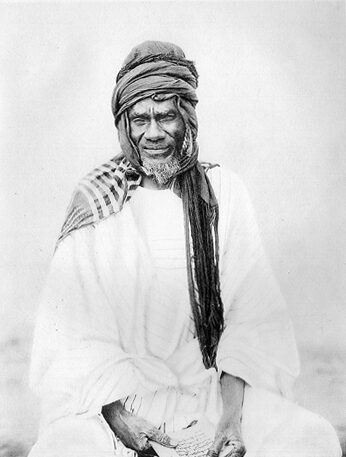
Samori Ture
Samori Ture was an African warlord and religious leader, founder of the Wassoulou Empire. Born 1830, in Manyambaladugu. Died June 2, 1900, in Ndjolé. Positions held include monarch.
Facts
9 facts · 2 confirmed by two sources · 0 cited · 7 from one source
Where this comes from
Papalocal keeps its own record. It started from these sources; what each one said is kept here as it was copied, so a change on their side never changes this page by itself. Tap one to read its version.
What Wikidata says · copied November 16, 2026 · revision 2570029068
- Described as
- African warlord and religious leader, founder of the Wassoulou Empire (1830–1900)
- Other names
- Samori Toure, Samory Touré, Almamy Samore Lafiya Toure
- Born
- 1830 · 1 reference
- Died
- June 2, 1900 · 1 reference
- Born in
- Manyambaladugu
- Died in
- Ndjolé
- Cause of death
- pneumonia
- Citizen of
- Guinea
- Occupation
- military personnel
- Positions held
- monarch
- Religion
- Islam
- Wikipedias with a page
- 35
Wikidata item Q469314 (wikidata.org/wiki/Q469314), public domain (CC0). Copied November 16, 2026.
What Wikipedia says · copied November 16, 2026 · revision 1373599058
Samori Ture (c. 1830 – June 2, 1900), also known as Samori Toure, Samory Touré, or Almamy Samore Lafiya Toure, was a Malinke Muslim cleric, military strategist, and founder of an empire that stretched across present-day north and eastern Guinea, north-eastern Sierra Leone, southern Mali, northern Côte d'Ivoire and part of southern Burkina Faso.
A deeply religious Muslim of the Maliki school of religious jurisprudence of Sunni Islam, he organized his empire and justified its expansion with Islamic principles. Ture resisted French colonial rule in West Africa from 1882 until his capture in 1898.
He was the great-grandfather of Guinea's first president, Ahmed Sékou Touré.
- Born, in its opening lines
- c. 1830
- Died, in its opening lines
- June 2, 1900
From the Wikipedia article “Samori Ture” (en.wikipedia.org/wiki/Samori_Ture), by its contributors, under CC BY-SA 4.0 (creativecommons.org/licenses/by-sa/4.0/). Copied November 16, 2026; not changed.
Confirmed Two sources agree. Cited One source, and it names where it got it. One source One source, without a reference of its own. Sources disagree The sources disagree. We show the best-supported value and keep theirs below.
