
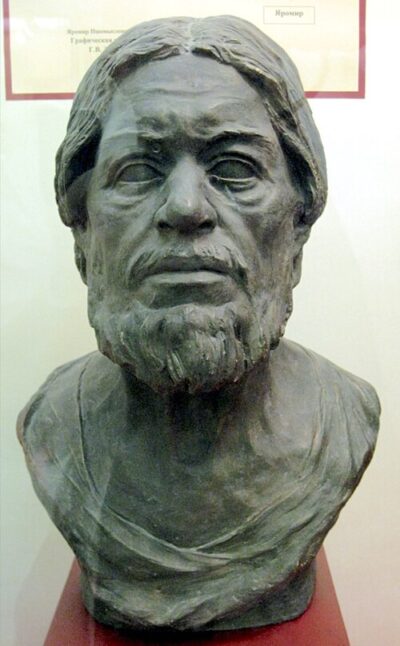
Samuel of Bulgaria
Samuel of Bulgaria was a Tsar of Bulgaria from 997 to 1014. Born 10th century. Died October 6, 1014, in Prespa. Positions held include King of Bulgaria (997–1014).
Facts
17 facts · 1 confirmed by two sources · 5 cited · 11 from one source
Where this comes from
Papalocal keeps its own record. It started from these sources; what each one said is kept here as it was copied, so a change on their side never changes this page by itself. Tap one to read its version.
What Wikidata says · copied November 16, 2026 · revision 2554910997
- Described as
- Tsar of Bulgaria from 997 to 1014
- Born
- 10th century
- Died
- October 6, 1014
- Died in
- Prespa · 1 reference
- Buried in
- Saint Sophia Church (2026–)
- Cause of death
- myocardial infarction
- Citizen of
- First Bulgarian Empire
- Occupation
- sovereign
- Positions held
- King of Bulgaria (997–1014)
- Spouse
- Agatha, wife of Samuel · 1 reference
- Children
- Miroslava of Bulgaria; Gavril Radomir · 1 reference; Katun of Bulgaria · 1 reference
- Father
- Comita Nikola · 1 reference
- Mother
- Ripsime · 1 reference
- Siblings
- Moses · 1 reference; Aron (Prince of Bulgaria) · 1 reference; David · 1 reference
- Wikipedias with a page
- 43
Wikidata item Q270740 (wikidata.org/wiki/Q270740), public domain (CC0). Copied November 16, 2026.
What Wikipedia says · copied November 16, 2026 · revision 1385336352
Samuel, Samuil or Samoil (Bulgarian: Самуил, romanized: Samuil, pronounced [sɐmuˈiɫ]; , pronounced [samɔˈiɫ/sɐmuˈiɫ]; Old Church Slavonic: Самоилъ; died 6 October 1014) was the Tsar (Emperor) of the First Bulgarian Empire from 997 to 6 October 1014. From 977 to 997, he was a general under Roman I of Bulgaria, the second surviving son of Emperor Peter I of Bulgaria, and co-ruled with him, as Roman bestowed upon him the command of the army and the effective royal authority. As Samuel struggled to preserve his country's independence from the Byzantine Empire, his rule was characterized by constant warfare against the Byzantines and their equally ambitious ruler Basil II.
In his early years, Samuel managed to inflict several major defeats on the Byzantines and to launch offensive campaigns into their territory. In the late 10th century, the Bulgarian armies conquered the Serb principality of Duklja and led campaigns against the Kingdoms of Croatia and Hungary. But from 1001, he was forced mainly to defend the Empire against the superior Byzantine armies. Samuel died of a heart attack on 6 October 1014, two months after the catastrophic battle of Kleidion. His successors failed to organize a resistance, and in 1018, four years after Samuel's death, the country capitulated, ending the five decades-long Byzantine–Bulgarian conflict.
Samuel was considered "invincible in power and unsurpassable in strength". Similar comments were made even in Constantinople, where John Kyriotes penned a poem offering a punning comparison between the Bulgarian Emperor and Halley's Comet, which appeared in 989. During Samuel's reign, Bulgaria gained control of most of the Balkans (with the notable exception of Thrace) as far as southern Greece. He moved the capital from Skopje to Ohrid, which had been the cultural and military centre of southwestern Bulgaria since Boris I's rule, and made the city the seat of the Bulgarian Patriarchate. Because of this, his realm is sometimes called the Western Bulgarian Empire. Samuel's energetic reign restored Bulgarian might on the Balkans, even though the Empire was disestablished after his death.
- Died, in its opening lines
- October 6, 1014
From the Wikipedia article “Samuel of Bulgaria” (en.wikipedia.org/wiki/Samuel_of_Bulgaria), by its contributors, under CC BY-SA 4.0 (creativecommons.org/licenses/by-sa/4.0/). Copied November 16, 2026; not changed.
Confirmed Two sources agree. Cited One source, and it names where it got it. One source One source, without a reference of its own. Sources disagree The sources disagree. We show the best-supported value and keep theirs below.
