
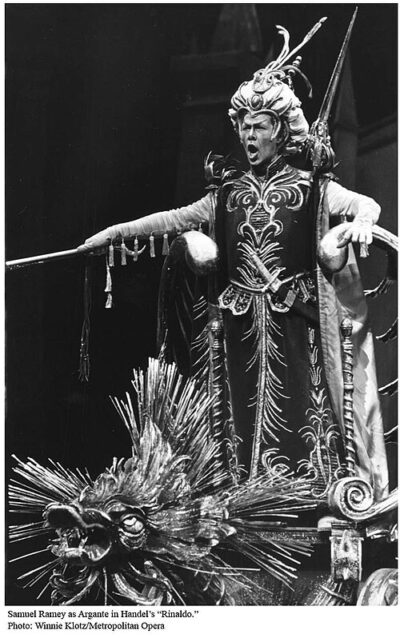
Samuel Ramey
Samuel Ramey is an American operatic bass. Born March 28, 1942, in Colby. Educated at Kansas State University and Wichita State University. Awards include Kansas Music Hall of Fame.
Facts
12 facts · 1 confirmed by two sources · 3 cited · 8 from one source
Where this comes from
Papalocal keeps its own record. It started from these sources; what each one said is kept here as it was copied, so a change on their side never changes this page by itself. Tap one to read its version.
What Wikidata says · copied November 16, 2026 · revision 2567252495
- Described as
- American operatic bass
- Other names
- Samuel Edward Ramey
- Born
- March 28, 1942 · 5 references
- Born in
- Colby · 1 reference
- Citizen of
- United States
- Occupation
- actor; opera singer · 1 reference
- Worked for
- Roosevelt University
- Education
- Kansas State University; Wichita State University; Colby High School · 1 reference
- Instrument
- voice
- Awards
- Kansas Music Hall of Fame (2017) · 1 reference
- Website
- http://www.samuelramey.com
- Wikipedias with a page
- 20
Wikidata item Q951556 (wikidata.org/wiki/Q951556), public domain (CC0). Copied November 16, 2026.
What Wikipedia says · copied November 16, 2026 · revision 1382896038
Samuel Ramey (born March 28, 1942) is an American operatic bass and voice actor. At the height of his career, he was greatly admired for his range and versatility, having possessed a sufficiently accomplished bel canto technique which enabled him to sing the music of Handel, Mozart and Rossini but with enough vocal power to handle the more overtly dramatic roles in Verdi, Puccini, and Meyerbeer operas.
- Born, in its opening lines
- March 28, 1942
From the Wikipedia article “Samuel Ramey” (en.wikipedia.org/wiki/Samuel_Ramey), by its contributors, under CC BY-SA 4.0 (creativecommons.org/licenses/by-sa/4.0/). Copied November 16, 2026; not changed.
Confirmed Two sources agree. Cited One source, and it names where it got it. One source One source, without a reference of its own. Sources disagree The sources disagree. We show the best-supported value and keep theirs below.
