
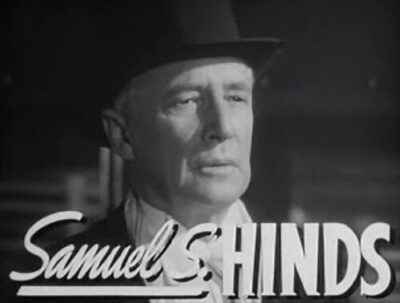
Samuel S. Hinds
Samuel S. Hinds was an American actor. Born April 4, 1875, in Brooklyn. Died October 13, 1948, in Pasadena. Educated at Harvard Law School and New York University School of Law.
Facts
13 facts · 2 confirmed by two sources · 4 cited · 7 from one source
Where this comes from
Papalocal keeps its own record. It started from these sources; what each one said is kept here as it was copied, so a change on their side never changes this page by itself. Tap one to read its version.
What Wikidata says · copied November 18, 2026 · revision 2567297874
- Described as
- American actor (1875-1948)
- Other names
- Samuel Southey Hinds
- Born
- April 4, 1875 · 1 reference
- Died
- October 13, 1948 · 1 reference
- Born in
- Brooklyn · 1 reference
- Died in
- Pasadena · 1 reference
- Buried in
- Inglewood Park Cemetery · 1 reference
- Cause of death
- pneumonia
- Citizen of
- United States
- Occupation
- actor · 1 reference; film actor · 1 reference
- Education
- Harvard Law School; New York University School of Law · 1 reference; Phillips Academy · 1 reference
- Genre
- Western
- Wikipedias with a page
- 17
Wikidata item Q2750248 (wikidata.org/wiki/Q2750248), public domain (CC0). Copied November 18, 2026.
What Wikipedia says · copied November 18, 2026 · revision 1384122968
Samuel Southey Hinds (April 4, 1875 – October 13, 1948) was an American actor and former lawyer. He was often cast as kindly authority figures and appeared in more than 200 films in a career lasting 22 years. Hinds is perhaps best remembered for playing Peter Bailey, the kindly father of James Stewart and founder of the Bailey Building and Loan, in It's a Wonderful Life (1946) and for his portrayal of Paul Sycamore in You Can't Take It with You (1938), both films directed by Frank Capra.
- Born, in its opening lines
- April 4, 1875
- Died, in its opening lines
- October 13, 1948
From the Wikipedia article “Samuel S. Hinds” (en.wikipedia.org/wiki/Samuel_S._Hinds), by its contributors, under CC BY-SA 4.0 (creativecommons.org/licenses/by-sa/4.0/). Copied November 18, 2026; not changed.
Confirmed Two sources agree. Cited One source, and it names where it got it. One source One source, without a reference of its own. Sources disagree The sources disagree. We show the best-supported value and keep theirs below.
