
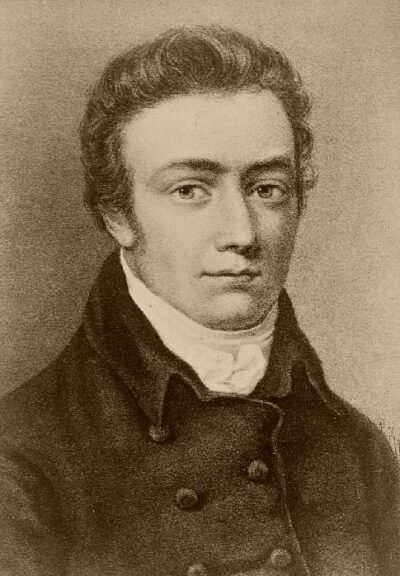
Samuel Taylor Coleridge
Samuel Taylor Coleridge was an English poet, literary critic and philosopher. Born October 21, 1772, in Ottery St Mary. Died July 25, 1834, in London. Known for The Rime of the Ancient Mariner, Kubla Khan and Lyrical Ballads. Educated at Christ's Hospital and Jesus College. Awards include Fellow of the Royal Society of Literature.
Facts
43 facts · 2 confirmed by two sources · 22 cited · 19 from one source
Where this comes from
Papalocal keeps its own record. It started from these sources; what each one said is kept here as it was copied, so a change on their side never changes this page by itself. Tap one to read its version.
What Wikidata says · copied November 16, 2026 · revision 2565594084
- Described as
- English poet, literary critic and philosopher (1772–1834)
- Other names
- S. T. Coleridge, Coleridge, Samuel Coleridge
- Born
- October 21, 1772 · 15 references
- Died
- July 25, 1834 · 16 references
- Born in
- Ottery St Mary · 1 reference
- Died in
- London
- Buried in
- Church of St Michael
- Cause of death
- heart failure
- Citizen of
- Kingdom of Great Britain; United Kingdom of Great Britain and Ireland
- Occupation
- poet · 2 references; philosopher · 2 references; theologian; literary critic · 1 reference; critic · 1 reference; writer · 2 references
- Education
- Christ's Hospital; Jesus College; The King's School
- Member of
- Lake Poets; Royal Society of Literature
- Known for
- The Rime of the Ancient Mariner; Kubla Khan; Lyrical Ballads; Christabel
- Awards
- Fellow of the Royal Society of Literature
- Field
- philosophy
- Spouse
- Sarah Fricker (1795–) · 2 references; Mary Matilda Betham
- Children
- Sara Coleridge · 3 references; Derwent Coleridge · 1 reference; Hartley Coleridge · 1 reference; Berkeley Coleridge · 1 reference
- Father
- John Coleridge · 1 reference
- Mother
- Anne Bowden · 2 references
- Siblings
- James Coleridge · 1 reference; William Coleridge · 1 reference; Luke Herman Coleridge · 1 reference; George Coleridge · 1 reference; Edward Coleridge · 1 reference; Lt. Francis Syndercombe Coleridge · 1 reference; Anne Coleridge · 1 reference; Capt. John Coleridge · 1 reference; William Coleridge · 1 reference
- Religion
- Anglicanism
- Wikipedias with a page
- 123
Wikidata item Q82409 (wikidata.org/wiki/Q82409), public domain (CC0). Copied November 16, 2026.
What Wikipedia says · copied November 16, 2026 · revision 1381542167
Samuel Taylor Coleridge ( KOH-lə-rij; 21 October 1772 – 25 July 1834) was an English poet, literary critic, philosopher, and theologian who was a founder of the Romantic Movement in England and a member of the Lake Poets with his friend William Wordsworth. He also shared volumes and collaborated with Charles Lamb, Robert Southey, and Charles Lloyd.
Coleridge wrote the poems The Rime of the Ancient Mariner and "Kubla Khan", as well as the major prose work Biographia Literaria. His critical works were highly influential, especially in relation to William Shakespeare, and he helped introduce German idealist philosophy to England. Coleridge coined many words and phrases, from the obscure theological term "sterilifidianism" to the familiar "suspension of disbelief," the avoidance of critical thinking to follow a narrative. He was also an important influence on Ralph Waldo Emerson and the beginnings of American transcendentalism because of his unique interpretation of Immanuel Kant's concept of intuition, which he outlined in both Biographia Literaria and Aids to Reflection.
Throughout his adult life, Coleridge had crippling bouts of anxiety and depression; it has been speculated that he had bipolar disorder, which had not been defined during his lifetime. He was physically unhealthy, which may have stemmed from a bout of rheumatic fever and other childhood illnesses. He was treated for these conditions with laudanum, which fostered a lifelong opium addiction. Coleridge had a turbulent career and personal life with a variety of highs and lows, but his public esteem grew after his death, and he became considered one of the most influential figures in English literature. For instance, a 2018 report by The Guardian labelled him "a genius" who had progressed into "one of the most renowned English poets". Organisations such as the Church of England celebrate his work during public events, such as a "Coleridge Day" in June, with activities including literary recitals.
- Born, in its opening lines
- October 21, 1772
- Died, in its opening lines
- July 25, 1834
From the Wikipedia article “Samuel Taylor Coleridge” (en.wikipedia.org/wiki/Samuel_Taylor_Coleridge), by its contributors, under CC BY-SA 4.0 (creativecommons.org/licenses/by-sa/4.0/). Copied November 16, 2026; not changed.
Confirmed Two sources agree. Cited One source, and it names where it got it. One source One source, without a reference of its own. Sources disagree The sources disagree. We show the best-supported value and keep theirs below.
