
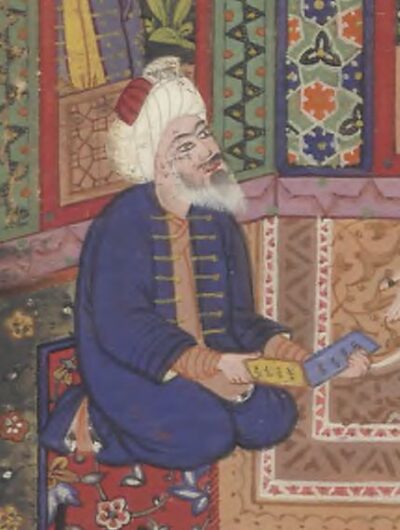
Sanai was the 12th-century Persian Sufi poet. Born 1080, in Ghazni. Died July 9, 1131, in Ghazni. Known for Hadiqat al-Haqiqa.
Facts
9 facts · 0 confirmed by two sources · 5 cited · 4 from one source
Where this comes from
Papalocal keeps its own record. It started from these sources; what each one said is kept here as it was copied, so a change on their side never changes this page by itself. Tap one to read its version.
What Wikidata says · copied November 16, 2026 · revision 2568065584
- Described as
- 12th-century Persian Sufi poet
- Other names
- Abu-l-Majd Majdud ibn Adam Sanai, Hakim Sanai
- Born
- 1080 · 2 references
- Died
- July 9, 1131 · 1 reference
- Born in
- Ghazni · 1 reference
- Died in
- Ghazni · 1 reference
- Citizen of
- Ghaznavid Empire
- Occupation
- poet · 2 references; philosopher · 1 reference
- Known for
- Hadiqat al-Haqiqa
- Religion
- Islam
- Wikipedias with a page
- 32
Wikidata item Q1148049 (wikidata.org/wiki/Q1148049), public domain (CC0). Copied November 16, 2026.
What Wikipedia says · copied November 16, 2026 · revision 1374053982
Hakim Abul-Majd Majdūd ibn Ādam Sanā'ī Ghaznavi (Persian: حکیم ابوالمجد مجدود بن آدم سنایی غزنوی), more commonly known as Sanai, was a renowned Iranian Sufi poet mystic from Ghazni. He is best known for his influential works The Walled Garden of Truth (Hadiqat al-Haqiqa) and The Divan. He is regarded as one of the pioneers of Persian Sufi poetry and had a major influence on later Iranian poets such as Attar and Rumi.
From the Wikipedia article “Sanai” (en.wikipedia.org/wiki/Sanai), by its contributors, under CC BY-SA 4.0 (creativecommons.org/licenses/by-sa/4.0/). Copied November 16, 2026; not changed.
Confirmed Two sources agree. Cited One source, and it names where it got it. One source One source, without a reference of its own. Sources disagree The sources disagree. We show the best-supported value and keep theirs below.
