
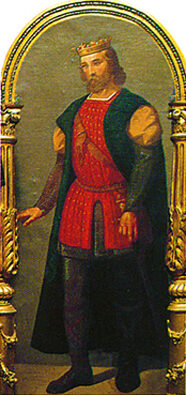
Sancho IV of Navarre was a King of Pamplona. Born 1039. Died June 4, 1076, in Peñalén. Positions held include King of Najera and King of Pamplona (1054–1076).
Facts
21 facts · 2 confirmed by two sources · 2 cited · 17 from one source
Where this comes from
Papalocal keeps its own record. It started from these sources; what each one said is kept here as it was copied, so a change on their side never changes this page by itself. Tap one to read its version.
What Wikidata says · copied November 16, 2026 · revision 2553948659
- Described as
- King of Pamplona
- Other names
- Sancho IV de Peñalén, Rey de Navarre
- Born
- 1039
- Died
- June 4, 1076
- Died in
- Peñalén
- Name at birth
- Antso Gartzeitz
- Citizen of
- Kingdom of Pamplona
- Occupation
- ruler
- Positions held
- King of Najera; King of Pamplona (1054–1076)
- Spouse
- Placencia, Queen of Navarre
- Father
- García Sánchez III of Pamplona · 1 reference
- Mother
- Stephanie, Queen of Pamplona · 1 reference
- Siblings
- Ramiro Garcés, Lord of Calahorra; Sancho Garcés; Fernando Garcés · 1 reference; Mayor Garcés; Mencía Garcés; Ramón Garcés; Sancha Garcés; Jimena Garcés; Urraca di Navarra; Ermesinda Garcés
- Wikipedias with a page
- 31
Wikidata item Q457299 (wikidata.org/wiki/Q457299), public domain (CC0). Copied November 16, 2026.
What Wikipedia says · copied November 16, 2026 · revision 1380097779
Sancho Garcés IV (Basque: Antso IV.a Gartzez; c. 1039 – 4 June 1076), nicknamed Sancho of Peñalén (Basque: Antso Peñalengoa, Spanish: Sancho el de Peñalén), was King of Pamplona from 1054 until his death. He was the eldest son of García Sánchez III and his wife, Stephanie, and was crowned king of Pamplona after his father was killed during the Battle of Atapuerca.
- Born, in its opening lines
- c. 1039
- Died, in its opening lines
- June 4, 1076
From the Wikipedia article “Sancho IV of Pamplona” (en.wikipedia.org/wiki/Sancho_IV_of_Pamplona), by its contributors, under CC BY-SA 4.0 (creativecommons.org/licenses/by-sa/4.0/). Copied November 16, 2026; not changed.
Confirmed Two sources agree. Cited One source, and it names where it got it. One source One source, without a reference of its own. Sources disagree The sources disagree. We show the best-supported value and keep theirs below.
