
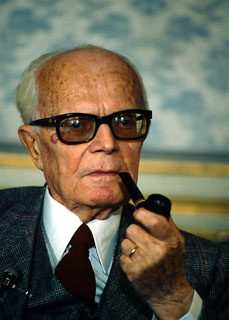
Sandro Pertini
Sandro Pertini was an Italian journalist, resistance leader and politician, President of Italy from 1978 to 1985. Born September 25, 1896, in San Giovanni. Died February 24, 1990, in Rome. Positions held include President of Italy (1978–1985), President of the Chamber of Deputies of Italy (1968–1976) and Italian senator for life (1985–1990). Educated at Liceo Gabriello Chiabrera di Savona and University of Genoa. Awards include Gold Medal of Military Valour, Otto Hahn Peace Medal and Four Freedoms Award – Freedom Medal.
Facts
45 facts · 2 confirmed by two sources · 19 cited · 24 from one source
Where this comes from
Papalocal keeps its own record. It started from these sources; what each one said is kept here as it was copied, so a change on their side never changes this page by itself. Tap one to read its version.
What Wikidata says · copied November 16, 2026 · revision 2561504806
- Described as
- Italian journalist, resistance leader and politician, President of Italy from 1978 to 1985
- Other names
- Alessandro Pertini
- Born
- September 25, 1896 · 11 references
- Died
- February 24, 1990 · 7 references
- Born in
- San Giovanni · 1 reference
- Died in
- Rome · 1 reference
- Buried in
- San Giovanni
- Name at birth
- Alessandro Pertini
- Citizen of
- Italy (1946–); Kingdom of Italy (–1946)
- Occupation
- politician · 2 references; journalist · 2 references; partisan · 2 references
- Positions held
- President of Italy (1978–1985) · 1 reference; President of the Chamber of Deputies of Italy (1968–1976) · 1 reference; Italian senator for life (1985–1990); member of the Chamber of Deputies of the Italian Republic (1953–1978) · 1 reference; member of the Senate of the Italian Republic (1948–1953); member of the Constituent Assembly of Italy; member of the National Council of the Kingdom of Italy · 1 reference
- Political party
- Italian Socialist Party; United Socialist Party · 1 reference
- Worked for
- University of Florence
- Education
- Liceo Gabriello Chiabrera di Savona (–1914) · 1 reference; University of Genoa (1919–) · 1 reference; University of Modena and Reggio Emilia (–1923) · 1 reference; Istituto Cesare Alfieri (–1924) · 2 references
- Member of
- Italia Libera (anti-fascist organization) · 1 reference
- Awards
- Gold Medal of Military Valour (1955) · 2 references; Otto Hahn Peace Medal (1988) · 1 reference; Four Freedoms Award – Freedom Medal (1986) · 2 references; honorary doctor of the University of Madrid Complutense (1985) · 1 reference; Grand Collar of the Military Order of Saint James of the Sword · 1 reference; Collar of the Order of Charles III (1980) · 1 reference; Honorary Knight Grand Cross of the Order of the Bath (1980) · 1 reference; Order of Vittorio Veneto · 1 reference; Commemorative Medal for the Italo-Austrian War 1915-1918 · 1 reference; Commemorative Medal of the Unity of Italy · 1 reference; Inter-Allied Victory Medal (Italy) · 1 reference; Order of the Patriotic War, 1st class · 1 reference; Silver Medal of Military Valour; Gold medal for merit in school, culture and art
- Spouse
- Carla Voltolina (1946–1990)
- Religion
- atheism
- Military branch
- Royal Italian Army · 1 reference
- Military rank
- lieutenant · 1 reference
- Website
- http://www.fondazionepertini.it/asp/fondazione.asp?IdSez=1
- Wikipedias with a page
- 71
Wikidata item Q1233 (wikidata.org/wiki/Q1233), public domain (CC0). Copied November 16, 2026.
What Wikipedia says · copied November 16, 2026 · revision 1381166277
Alessandro Giuseppe Antonio "Sandro" Pertini (25 September 1896 – 24 February 1990) was an Italian journalist, socialist politician, partisan and statesman who served as the
president of Italy from 1978 to 1985.
- Born, in its opening lines
- September 25, 1896
- Died, in its opening lines
- February 24, 1990
From the Wikipedia article “Sandro Pertini” (en.wikipedia.org/wiki/Sandro_Pertini), by its contributors, under CC BY-SA 4.0 (creativecommons.org/licenses/by-sa/4.0/). Copied November 16, 2026; not changed.
Confirmed Two sources agree. Cited One source, and it names where it got it. One source One source, without a reference of its own. Sources disagree The sources disagree. We show the best-supported value and keep theirs below.
