
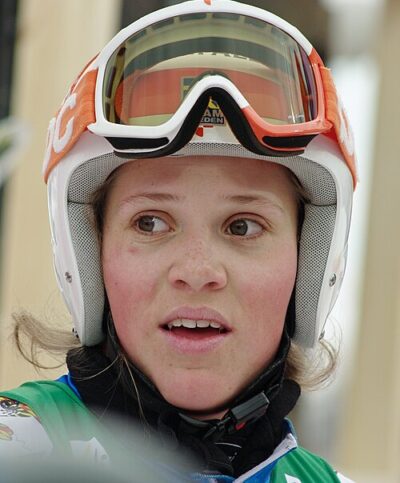
Sara Hector is a Swedish alpine skier. Born September 4, 1992, in Sandviken.
Facts
7 facts · 1 confirmed by two sources · 3 cited · 3 from one source
Where this comes from
Papalocal keeps its own record. It started from these sources; what each one said is kept here as it was copied, so a change on their side never changes this page by itself. Tap one to read its version.
What Wikidata says · copied November 16, 2026 · revision 2555014847
- Described as
- Swedish alpine skier
- Other names
- Sara Maria Hector
- Born
- September 4, 1992 · 1 reference
- Born in
- Sandviken · 1 reference
- Citizen of
- Sweden · 1 reference
- Occupation
- alpine skier · 1 reference
- Sport
- alpine skiing
- Height
- 1.67 m (5 ft 6 in) · 1 reference
- Website
- http://www.sarahector.com
- Wikipedias with a page
- 29
Wikidata item Q289740 (wikidata.org/wiki/Q289740), public domain (CC0). Copied November 16, 2026.
What Wikipedia says · copied November 16, 2026 · revision 1382139478
Sara Maria Hector (born 4 September 1992) is a Swedish World Cup alpine ski racer who is the 2022 Olympic champion in giant slalom. She has competed at seven World Championships and won four medals in the team event (2011, 2015, 2021, 2025).
Hector gained her first World Cup victory in December 2014, a giant slalom in Kühtai, Austria. At her third Winter Olympics in 2022, she was the gold medalist in giant slalom, which was her first Olympic medal and the first Olympic gold for Sweden in the women's GS event in thirty years. She was the flag bearer for Sweden during the opening ceremony of the 2026 Winter Olympics along with Walter Wallberg.
Hector won the silver medal in the giant slalom at the 2026 Winter Olympics.
- Born, in its opening lines
- September 4, 1992
From the Wikipedia article “Sara Hector” (en.wikipedia.org/wiki/Sara_Hector), by its contributors, under CC BY-SA 4.0 (creativecommons.org/licenses/by-sa/4.0/). Copied November 16, 2026; not changed.
Confirmed Two sources agree. Cited One source, and it names where it got it. One source One source, without a reference of its own. Sources disagree The sources disagree. We show the best-supported value and keep theirs below.
