
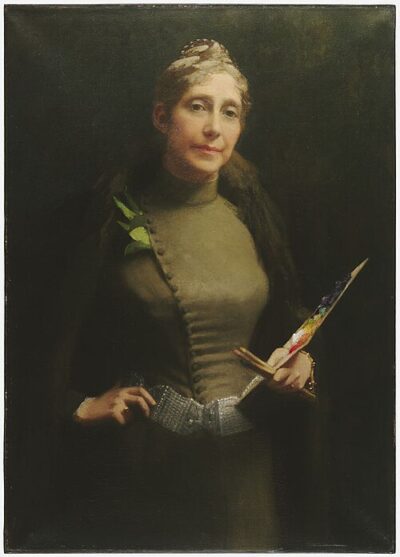
Sarah W. Whitman was an American artist. Born 1842, in Baltimore. Died June 25, 1904, in Boston.
Facts
10 facts · 2 confirmed by two sources · 5 cited · 3 from one source
Where this comes from
Papalocal keeps its own record. It started from these sources; what each one said is kept here as it was copied, so a change on their side never changes this page by itself. Tap one to read its version.
What Wikidata says · copied November 21, 2026 · revision 2548242345
- Described as
- American artist (1842-1904)
- Other names
- Sarah Wyman Whitman, Sarah de Saint Prix Wyman, Sarah de St. Prix Wyman Whitman, Sarah De St Prix Wyman Whitman, Sarah Whitman, Sarah de Saint Prix Whitman, Henry, Mrs. Whitman, Sarah De Saint Prix Whitman, Sarah De St. Prix Wyman Whitman
- Born
- 1842 · 10 references
- Died
- June 25, 1904
- Born in
- Baltimore · 2 references
- Died in
- Boston · 2 references
- Citizen of
- United States
- Occupation
- writer; graphic designer; artist · 3 references; painter · 1 reference
- Worked for
- Houghton Mifflin Harcourt · 1 reference
- Wikipedias with a page
- 7
Wikidata item Q2224527 (wikidata.org/wiki/Q2224527), public domain (CC0). Copied November 21, 2026.
What Wikipedia says · copied November 21, 2026 · revision 1376041107
Sarah de St. Prix Wyman Whitman (1842–1904) was an American stained glass artist, painter, and book cover designer. Successful at a time when few women had professional art careers, she founded her own firm, Lily Glass Works. Her stained glass windows are found in churches and colleges throughout the northeastern United States. As a member of the board of the Harvard University "Annex," she helped to found Radcliffe College.
- Born, in its opening lines
- 1842
- Died, in its opening lines
- 1904
From the Wikipedia article “Sarah W. Whitman” (en.wikipedia.org/wiki/Sarah_W._Whitman), by its contributors, under CC BY-SA 4.0 (creativecommons.org/licenses/by-sa/4.0/). Copied November 21, 2026; not changed.
Confirmed Two sources agree. Cited One source, and it names where it got it. One source One source, without a reference of its own. Sources disagree The sources disagree. We show the best-supported value and keep theirs below.
