
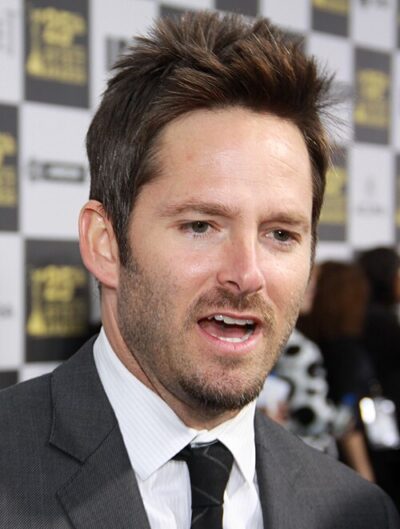
Scott Cooper
Scott Cooper is an American actor, screenwriter, director, and producer. Born 1970, in Abingdon. Educated at Hampden–Sydney College and Lee Strasberg Theatre and Film Institute. Awards include Independent Spirit Award for Best First Feature.
Facts
15 facts · 1 confirmed by two sources · 8 cited · 6 from one source
Where this comes from
Papalocal keeps its own record. It started from these sources; what each one said is kept here as it was copied, so a change on their side never changes this page by itself. Tap one to read its version.
What Wikidata says · copied November 16, 2026 · revision 2566785934
- Described as
- American actor, screenwriter, director, and producer (born 1970)
- Born
- 1970 · 5 references
- Born in
- Abingdon · 1 reference
- Citizen of
- United States · 2 references
- Occupation
- film director · 1 reference; film producer · 1 reference; actor · 3 references; screenwriter · 1 reference; television actor · 1 reference; film actor · 1 reference; director · 1 reference
- Education
- Hampden–Sydney College; Lee Strasberg Theatre and Film Institute; Abingdon High School · 1 reference
- Member of
- Writers Guild of America West
- Awards
- Independent Spirit Award for Best First Feature (2010)
- Wikipedias with a page
- 23
Wikidata item Q1750712 (wikidata.org/wiki/Q1750712), public domain (CC0). Copied November 16, 2026.
What Wikipedia says · copied November 16, 2026 · revision 1381337151
Scott Cooper (born April 20, 1970) is an American filmmaker and former actor. He is known for the films Crazy Heart (2009), Out of the Furnace (2013), Black Mass (2015), Hostiles (2017), Antlers (2021), The Pale Blue Eye (2022), and Springsteen: Deliver Me from Nowhere (2025).
- Born, in its opening lines
- April 20, 1970
From the Wikipedia article “Scott Cooper (director)” (en.wikipedia.org/wiki/Scott_Cooper_(director)), by its contributors, under CC BY-SA 4.0 (creativecommons.org/licenses/by-sa/4.0/). Copied November 16, 2026; not changed.
Confirmed Two sources agree. Cited One source, and it names where it got it. One source One source, without a reference of its own. Sources disagree The sources disagree. We show the best-supported value and keep theirs below.
