
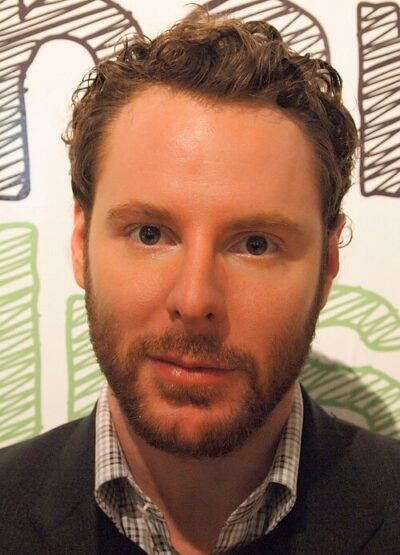
Sean Parker
Sean Parker is an American entrepreneur, programmer and philanthropist. Born December 3, 1979, in Herndon. Educated at Oakton High School and Chantilly High School. Awards include Australian Dance Awards.
Facts
11 facts · 1 confirmed by two sources · 0 cited · 10 from one source
Where this comes from
Papalocal keeps its own record. It started from these sources; what each one said is kept here as it was copied, so a change on their side never changes this page by itself. Tap one to read its version.
What Wikidata says · copied November 15, 2026 · revision 2564338319
- Described as
- American entrepreneur, programmer and philanthropist
- Born
- December 3, 1979
- Born in
- Herndon
- Citizen of
- United States
- Occupation
- entrepreneur; computer scientist; billionaire
- Education
- Oakton High School · 1 reference; Chantilly High School
- Awards
- Australian Dance Awards
- Spouse
- Alexandra Lenas (2012–)
- Father
- Bruce B. Parker
- Wikipedias with a page
- 38
Wikidata item Q328929 (wikidata.org/wiki/Q328929), public domain (CC0). Copied November 15, 2026.
What Wikipedia says · copied November 15, 2026 · revision 1384345806
Sean Parker (born December 3, 1979) is an American entrepreneur and philanthropist, most notable for co-founding the file-sharing computer service Napster, and was the first president of the social networking website Facebook. He also co-founded Plaxo, Causes, Airtime.com, and Brigade, an online platform for civic engagement. He is the founder and chairman of the Parker Foundation, which focuses on life sciences, global public health, and civic engagement. According to Forbes, as of May 2025, Parker's estimated net worth stood at US$3.0 billion, placing him in the top 1,250 richest individuals in the world.
- Born, in its opening lines
- December 3, 1979
From the Wikipedia article “Sean Parker” (en.wikipedia.org/wiki/Sean_Parker), by its contributors, under CC BY-SA 4.0 (creativecommons.org/licenses/by-sa/4.0/). Copied November 15, 2026; not changed.
Confirmed Two sources agree. Cited One source, and it names where it got it. One source One source, without a reference of its own. Sources disagree The sources disagree. We show the best-supported value and keep theirs below.
