
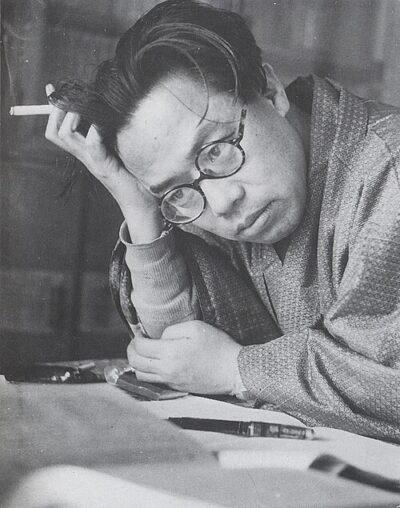
Seichō Matsumoto
Seichō Matsumoto was a Japanese author. Born December 21, 1909, in Kitakyūshū. Died August 4, 1992, in Tokyo. Known for A Certain Legend of the Kokura Diary, Tokyo Express and Zero Focus. Educated at Kitakyushu Municipal Kiyomizu Elementary School. Awards include Akutagawa Prize, Mystery Writers of Japan Award and Bungeishunju Readers' Choice Award.
Facts
31 facts · 2 confirmed by two sources · 7 cited · 22 from one source
Where this comes from
Papalocal keeps its own record. It started from these sources; what each one said is kept here as it was copied, so a change on their side never changes this page by itself. Tap one to read its version.
What Wikidata says · copied November 18, 2026 · revision 2570256913
- Described as
- Japanese author (1909–1992)
- Other names
- Seicho Matsumoto, Matsumoto Seichō, Matsumoto Seicho, 松本清張
- Born
- December 21, 1909 · 3 references
- Died
- August 4, 1992 · 4 references
- Born in
- Kitakyūshū
- Died in
- Tokyo · 2 references
- Buried in
- Daizen-ji
- Name at birth
- 松本 清張 · 1 reference
- Citizen of
- Japan; Empire of Japan (–1947)
- Occupation
- writer; novelist; short story writer; crime fiction writer · 1 reference
- Worked for
- Asahi Shimbun Seibu Head Office
- Education
- Kitakyushu Municipal Kiyomizu Elementary School
- Genre
- novella; non-fiction; history book
- Known for
- A Certain Legend of the Kokura Diary; Tokyo Express; Zero Focus; Inspector Imanishi Investigates; Black Leather Notebook; Black Fog over Japan; Unearthing the Shōwa Period; Essay of Yamatai
- Awards
- Akutagawa Prize (1952) · 1 reference; Mystery Writers of Japan Award (1957) · 1 reference; Bungeishunju Readers' Choice Award (1959); Yoshikawa Eiji Prize for Literature (1967) · 1 reference; Kikuchi Kan Prize (1970) · 1 reference; Asahi Prize (1990)
- Wikipedias with a page
- 21
Wikidata item Q201580 (wikidata.org/wiki/Q201580), public domain (CC0). Copied November 18, 2026.
What Wikipedia says · copied November 18, 2026 · revision 1380976573
Seichō Matsumoto (松本 清張, Matsumoto Seichō; Japanese pronunciation: [mä̀.t͡sɨ́.mó̞.tó̞ (|) sé̞ì.c̟͡ɕò̞ò̞, -sé̞è̞-]; December 21, 1909 – August 4, 1992; born Kiyoharu Matsumoto) was a Japanese writer, credited with popularizing detective fiction in Japan.
Matsumoto's works broke new ground by incorporating elements of human psychology and ordinary life. His works often reflect a wider social context and postwar nihilism that expanded the scope and further darkened the atmosphere of the genre. His exposé of corruption among police officials and criminals was a new addition to the field. The subject of investigation was not just the crime but also the society affected.
Although Matsumoto was a self-educated prolific author, his first book was not printed until he was in his forties. In the following 40 years, he published more than 450 works. Matsumoto's work included historical novels and non-fiction, but it was his mystery and detective fiction that solidified his reputation as a writer internationally.
Credited with popularizing the genre among readers in his country, Matsumoto became Japan's best-selling and highest earning author in the 1960s. His most acclaimed detective novels, including Ten to sen (1958; Points and Lines, 1970); Suna no utsuwa (1961; Inspector Imanishi Investigates, 1989) and Kiri no hata (1961; Pro Bono, 2012), have been translated into a number of languages, including English. He received the Akutagawa Prize in 1952, the Kikuchi Kan Prize in 1970, and the Mystery Writers of Japan Award in 1957. He served as president of the Mystery Writers of Japan from 1963 to 1971.
Matsumoto also collaborated with film director Yoshitarō Nomura on adaptations of eight of his novels to film, including Castle of Sand.
- Born, in its opening lines
- December 21, 1909
- Died, in its opening lines
- August 4, 1992
From the Wikipedia article “Seichō Matsumoto” (en.wikipedia.org/wiki/Seichō_Matsumoto), by its contributors, under CC BY-SA 4.0 (creativecommons.org/licenses/by-sa/4.0/). Copied November 18, 2026; not changed.
Confirmed Two sources agree. Cited One source, and it names where it got it. One source One source, without a reference of its own. Sources disagree The sources disagree. We show the best-supported value and keep theirs below.
