
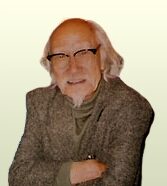
Seijun Suzuki
Seijun Suzuki was a Japanese film director. Born May 24, 1923, in Nihonbashi-ku. Died February 13, 2017, in Tokyo. Known for Zigeunerweisen. Awards include Medal with Purple Ribbon and Blue Ribbon Awards for Best Director.
Facts
20 facts · 2 confirmed by two sources · 3 cited · 14 from one source · 1 where the sources disagree
What’s different
- Name at birth: we show Seitaro Suzuki (Sources disagree). Wikidata also lists 鈴木 清太郎
Where this comes from
Papalocal keeps its own record. It started from these sources; what each one said is kept here as it was copied, so a change on their side never changes this page by itself. Tap one to read its version.
What Wikidata says · copied November 18, 2026 · revision 2553719138
- Described as
- Japanese film director (1923–2017)
- Other names
- Suzuki Seijun, Seitaro Suzuki
- Born
- May 24, 1923 · 3 references
- Died
- February 13, 2017 · 3 references
- Born in
- Nihonbashi-ku
- Died in
- Tokyo · 1 reference
- Buried in
- Saizō-in Temple
- Cause of death
- chronic obstructive pulmonary disease
- Name at birth
- Seitaro Suzuki; 鈴木 清太郎
- Citizen of
- Japan; Empire of Japan (–1947)
- Occupation
- film director; television director; actor · 1 reference; writer; screenwriter; director · 2 references; film producer · 1 reference
- Known for
- Zigeunerweisen
- Awards
- Medal with Purple Ribbon (1990); Blue Ribbon Awards for Best Director (1981)
- Siblings
- Kenji Suzuki
- Wikipedias with a page
- 23
Wikidata item Q2296663 (wikidata.org/wiki/Q2296663), public domain (CC0). Copied November 18, 2026.
What Wikipedia says · copied November 18, 2026 · revision 1351425278
Seijun Suzuki (鈴木 清順, Suzuki Seijun), born Seitaro Suzuki (鈴木 清太郎, Suzuki Seitarō) (24 May 1923 – 13 February 2017), was a Japanese filmmaker, actor, and screenwriter. His films are known for their florid visual style, absurd humour, and a playful rejection of traditional film grammar. He made 40 predominately B-movies for the Nikkatsu Company between 1956 and 1967, working most prolifically in the yakuza genre. His increasingly surreal style began to draw the ire of the studio in 1963 and culminated in his ultimate dismissal for what is now regarded as his magnum opus, Branded to Kill (1967), starring notable collaborator Joe Shishido. Suzuki successfully sued the studio for wrongful dismissal, but he was blacklisted for 10 years after that. As an independent filmmaker, he won critical acclaim and a Japanese Academy Award for his Taishō trilogy, Zigeunerweisen (1980), Kagero-za (1981) and Yumeji (1991).
His films remained widely unknown outside Japan until a series of theatrical retrospectives beginning in the mid-1980s, home video releases of key films such as Branded to Kill and Tokyo Drifter in the late 1990s and tributes by such acclaimed filmmakers as Jim Jarmusch, Takeshi Kitano, Wong Kar-wai and Quentin Tarantino signaled his international discovery. Suzuki continued making films, albeit sporadically, until the early 2000s.
- Born, in its opening lines
- May 24, 1923
- Died, in its opening lines
- February 13, 2017
From the Wikipedia article “Seijun Suzuki” (en.wikipedia.org/wiki/Seijun_Suzuki), by its contributors, under CC BY-SA 4.0 (creativecommons.org/licenses/by-sa/4.0/). Copied November 18, 2026; not changed.
Confirmed Two sources agree. Cited One source, and it names where it got it. One source One source, without a reference of its own. Sources disagree The sources disagree. We show the best-supported value and keep theirs below.
