
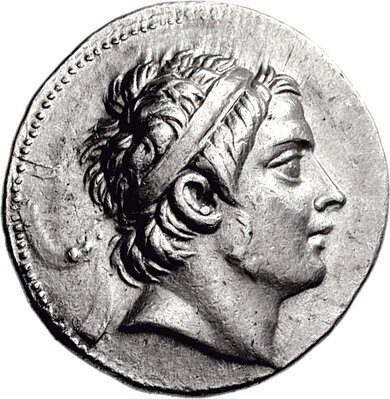
Seleucus III Ceraunus
Seleucus III Ceraunus was a Ruler of the Seleucid Kingdom from 225 to 223 BC. Born 243 BC. Died 223 BC. Positions held include Seleucid ruler (-225–-223).
Facts
9 facts · 0 confirmed by two sources · 0 cited · 9 from one source
Where this comes from
Papalocal keeps its own record. It started from these sources; what each one said is kept here as it was copied, so a change on their side never changes this page by itself. Tap one to read its version.
What Wikidata says · copied November 16, 2026 · revision 2568843676
- Described as
- Ruler of the Seleucid Kingdom from 225 to 223 BC
- Other names
- Seleucus III Soter
- Born
- 243 BC
- Died
- 223 BC
- Citizen of
- Seleucid Empire
- Occupation
- sovereign
- Positions held
- Seleucid ruler (-225–-223)
- Father
- Seleucus II Callinicus
- Mother
- Laodice II
- Siblings
- Antiochus III the Great; Antiochis
- Wikipedias with a page
- 41
Wikidata item Q3371 (wikidata.org/wiki/Q3371), public domain (CC0). Copied November 16, 2026.
What Wikipedia says · copied November 16, 2026 · revision 1358961591
Seleucus III Ceraunus (Ancient Greek: Σέλευκος Κεραυνός, Séleukos Keraunós), later also known as Soter (Ancient Greek: Σωτήρ, Sōtḗr; born 244 or 243 BCE; died 223 BCE in Phrygia), was the eldest son of Seleucus II Callinicus and Laodice II, and for a few years—between 226/5 and 223 BCE—king of the Seleucid Empire. His epithets mean "Thunderbolt" and "Savior," while his birth name was Alexander. In 225 BCE, following the death of his father Seleucus II—who succumbed to injuries from a fall from his horse—Seleucus III succeeded him as king of the Seleucid Empire. In 223 BCE, he was assassinated in Asia Minor by courtiers during a campaign against Attalus I of Pergamon. His brother Antiochus subsequently ascended the throne.
From the Wikipedia article “Seleucus III Ceraunus” (en.wikipedia.org/wiki/Seleucus_III_Ceraunus), by its contributors, under CC BY-SA 4.0 (creativecommons.org/licenses/by-sa/4.0/). Copied November 16, 2026; not changed.
Confirmed Two sources agree. Cited One source, and it names where it got it. One source One source, without a reference of its own. Sources disagree The sources disagree. We show the best-supported value and keep theirs below.
