
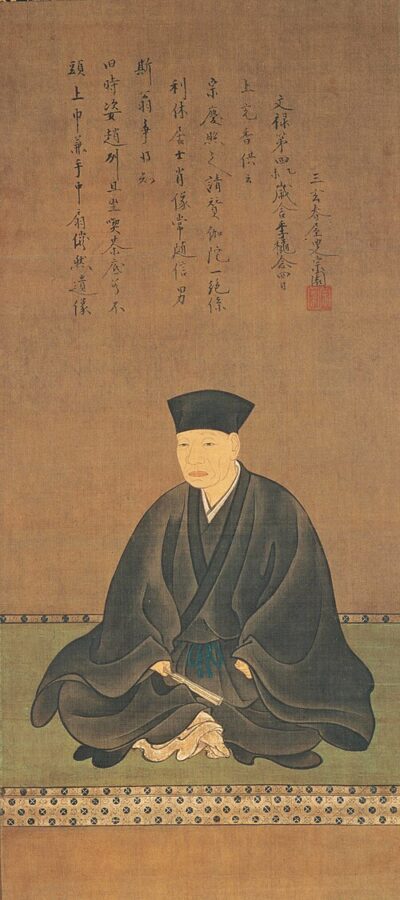
Sen no Rikyū was a Japanese tea master. Born 1522, in Sakai. Died April 21, 1591, in Kyoto. Known for Tai-an.
Facts
15 facts · 2 confirmed by two sources · 0 cited · 13 from one source
Where this comes from
Papalocal keeps its own record. It started from these sources; what each one said is kept here as it was copied, so a change on their side never changes this page by itself. Tap one to read its version.
What Wikidata says · copied November 16, 2026 · revision 2553939722
- Described as
- Japanese tea master
- Other names
- Sen no Rikyû, Rikyû Sen, Rikyū Sen, Sen no Rikyu, Rikyu Sen, Sen no Rikyuu, Rikyū
- Born
- 1522
- Died
- April 21, 1591 · 2 references
- Born in
- Sakai
- Died in
- Kyoto
- Cause of death
- seppuku
- Name at birth
- 田中 与四郎
- Citizen of
- Japan
- Occupation
- Buddhist monk; tea master
- Worked for
- Oda Nobunaga; Toyotomi Hideyoshi
- Known for
- Tai-an
- Children
- Sen Dōan
- Father
- Tanaka Yohyōe
- Religion
- Buddhism
- Wikipedias with a page
- 32
Wikidata item Q305477 (wikidata.org/wiki/Q305477), public domain (CC0). Copied November 16, 2026.
What Wikipedia says · copied November 16, 2026 · revision 1380999105
Sen no Rikyū (Japanese: 千 利休; 1522 – April 21, 1591), also known simply as Rikyū, was a Japanese tea master considered the most important influence on the Japanese tea ceremony, particularly the tradition of wabi-cha. He was also the first to emphasize several key aspects of the ceremony, including rustic simplicity, directness of approach and honesty of self. Originating from the Sengoku and Azuchi–Momoyama periods, these aspects of the tea ceremony persist.
Three iemoto or sōke ('head houses') of tea ceremony are directly descended from Rikyū: the Omotesenke, Urasenke, and Mushakōjisenke, all of which are dedicated to passing forward the teachings of their mutual family founder, Rikyū. They are collectively referred to as san senke.
- Born, in its opening lines
- 1522
- Died, in its opening lines
- April 21, 1591
From the Wikipedia article “Sen no Rikyū” (en.wikipedia.org/wiki/Sen_no_Rikyū), by its contributors, under CC BY-SA 4.0 (creativecommons.org/licenses/by-sa/4.0/). Copied November 16, 2026; not changed.
Confirmed Two sources agree. Cited One source, and it names where it got it. One source One source, without a reference of its own. Sources disagree The sources disagree. We show the best-supported value and keep theirs below.
