
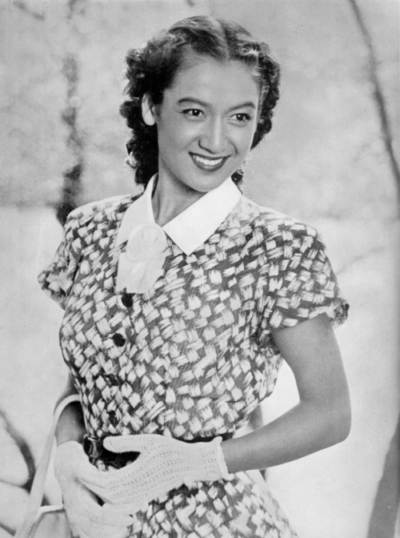
Setsuko Hara
Setsuko Hara was a Japanese actress. Born June 17, 1920, in Yokohama. Died September 5, 2015, in Kanagawa Prefecture. Awards include Blue Ribbon Awards for Best Actress and Mainichi Film Award for Best Actress.
Facts
14 facts · 2 confirmed by two sources · 4 cited · 8 from one source
Where this comes from
Papalocal keeps its own record. It started from these sources; what each one said is kept here as it was copied, so a change on their side never changes this page by itself. Tap one to read its version.
What Wikidata says · copied November 16, 2026 · revision 2567468166
- Described as
- Japanese actress (1920–2015)
- Born
- June 17, 1920 · 5 references
- Died
- September 5, 2015 · 5 references
- Born in
- Yokohama · 1 reference
- Died in
- Kanagawa Prefecture
- Cause of death
- pneumonia
- Citizen of
- Japan; Empire of Japan (–1947)
- Occupation
- actor · 1 reference; film actor · 1 reference
- Awards
- Blue Ribbon Awards for Best Actress (1952); Mainichi Film Award for Best Actress
- Field
- acting · 1 reference
- Siblings
- Yoshio Aida; Sumiko Aida
- Wikipedias with a page
- 43
Wikidata item Q236129 (wikidata.org/wiki/Q236129), public domain (CC0). Copied November 16, 2026.
What Wikipedia says · copied November 16, 2026 · revision 1372047095
Setsuko Hara (原 節子, Hara Setsuko; born Masae Aida (会田 昌江); 17 June 1920 – 5 September 2015) was a Japanese actress. She is best known for her performances in Yasujirō Ozu's films Late Spring (1949), Tokyo Story (1953) and Tokyo Twilight (1957), amongst many others, and for working extensively with director Mikio Naruse. She is widely considered to be one of the greatest Japanese film actresses of all time.
- Born, in its opening lines
- June 17, 1920
- Died, in its opening lines
- September 5, 2015
From the Wikipedia article “Setsuko Hara” (en.wikipedia.org/wiki/Setsuko_Hara), by its contributors, under CC BY-SA 4.0 (creativecommons.org/licenses/by-sa/4.0/). Copied November 16, 2026; not changed.
Confirmed Two sources agree. Cited One source, and it names where it got it. One source One source, without a reference of its own. Sources disagree The sources disagree. We show the best-supported value and keep theirs below.
