
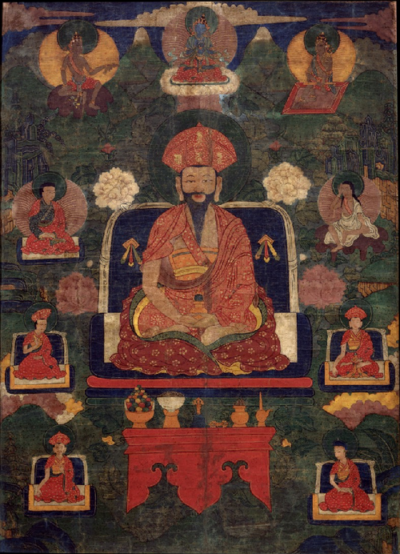
Shabdrung Ngawang Namgyal
Shabdrung Ngawang Namgyal was a Bhutanese Lama. Born 1594. Died 1651, in Punakha. Positions held include monarch and Shabdrung.
Facts
13 facts · 2 confirmed by two sources · 0 cited · 11 from one source
Where this comes from
Papalocal keeps its own record. It started from these sources; what each one said is kept here as it was copied, so a change on their side never changes this page by itself. Tap one to read its version.
What Wikidata says · copied November 16, 2026 · revision 2563077616
- Described as
- Bhutanese Lama (1594-1651)
- Other names
- Ngawang Namgyal, Shabdrung Ngawang Namgyel
- Born
- 1594 · 2 references
- Died
- 1651 · 2 references
- Died in
- Punakha · 1 reference
- Buried in
- Bhutan
- Occupation
- Buddhist monk; politician · 1 reference; writer · 1 reference
- Positions held
- monarch; Shabdrung
- Children
- Druk Gyalsé Jampal Dorjé
- Father
- Drukpa Yab Chen Tenpé Nyima
- Religion
- Tibetan Buddhism; Drukpa Lineage
- Wikipedias with a page
- 36
Wikidata item Q337583 (wikidata.org/wiki/Q337583), public domain (CC0). Copied November 16, 2026.
What Wikipedia says · copied November 16, 2026 · revision 1359099422
Ngawang Namgyal (Tibetan: ཞབས་དྲུང་ངག་དབང་རྣམ་རྒྱལ་, Wylie: zhabs drung ngag dbang rnam rgyal; alternative spellings include Zhabdrung Ngawang Namgyel; 1594–1651), known colloquially as The Bearded Lama, was a Tibetan Buddhist Drukpa Kagyu school Rinpoche, and the unifier of Bhutan as a nation-state. He was later granted the honorific title Zhabdrung Rinpoche, approximately "at whose feet one submits". In addition to unifying the various warring fiefdoms for the first time in the 1630s, he also sought to create a distinct Bhutanese cultural identity separate from the Tibetan culture from which it was derived.
- Born, in its opening lines
- 1594
- Died, in its opening lines
- 1651
From the Wikipedia article “Ngawang Namgyal” (en.wikipedia.org/wiki/Ngawang_Namgyal), by its contributors, under CC BY-SA 4.0 (creativecommons.org/licenses/by-sa/4.0/). Copied November 16, 2026; not changed.
Confirmed Two sources agree. Cited One source, and it names where it got it. One source One source, without a reference of its own. Sources disagree The sources disagree. We show the best-supported value and keep theirs below.
