
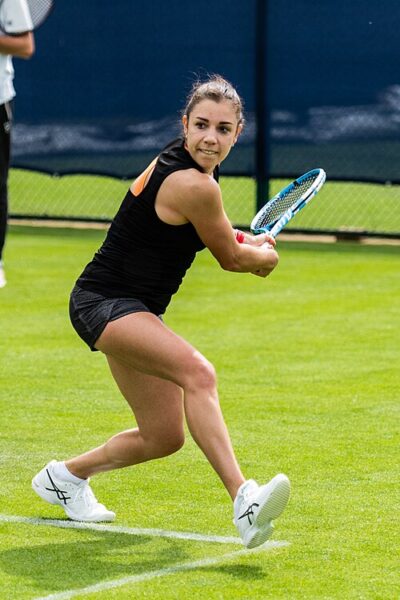
Sharon Fichman
Sharon Fichman is a Canadian female tennis player. Born December 3, 1990, in Toronto. Teams include Canada Billie Jean King Cup team (2005–). Educated at Forest Hill Collegiate Institute.
Facts
10 facts · 1 confirmed by two sources · 5 cited · 4 from one source
Where this comes from
Papalocal keeps its own record. It started from these sources; what each one said is kept here as it was copied, so a change on their side never changes this page by itself. Tap one to read its version.
What Wikidata says · copied November 16, 2026 · revision 2520670503
- Described as
- Canadian female tennis player
- Born
- December 3, 1990 · 2 references
- Born in
- Toronto · 2 references
- Citizen of
- Canada · 1 reference
- Occupation
- tennis player · 1 reference
- Education
- Forest Hill Collegiate Institute
- Teams
- Canada Billie Jean King Cup team (2005–)
- Sport
- tennis · 1 reference
- Religion
- Judaism
- Lived in
- Toronto · 1 reference
- Height
- 1.63 m (5 ft 4 in) · 1 reference
- Wikipedias with a page
- 20
Wikidata item Q1026173 (wikidata.org/wiki/Q1026173), public domain (CC0). Copied November 16, 2026.
What Wikipedia says · copied November 16, 2026 · revision 1368365474
Sharon Fichman ( FITCH-mən; born December 3, 1990) is a Canadian former tennis player. She achieved career-high WTA rankings of 77 in singles (May 2014) and 21 in doubles (January 2022).
In 2005, Fichman won the gold medal in women's singles at the 2005 Maccabiah Games in Israel, at the age of 14. She was ranked No. 5 on the ITF Junior Circuit in December 2006.
Fichman was inactive from May 2016 to April 2018, but returned to tennis in doubles at the 60k event in Indian Harbour Beach, reaching the quarterfinals with Jamie Loeb. She qualified for the 2021 WTA Finals with Giuliana Olmos.
- Born, in its opening lines
- December 3, 1990
From the Wikipedia article “Sharon Fichman” (en.wikipedia.org/wiki/Sharon_Fichman), by its contributors, under CC BY-SA 4.0 (creativecommons.org/licenses/by-sa/4.0/). Copied November 16, 2026; not changed.
Confirmed Two sources agree. Cited One source, and it names where it got it. One source One source, without a reference of its own. Sources disagree The sources disagree. We show the best-supported value and keep theirs below.
