
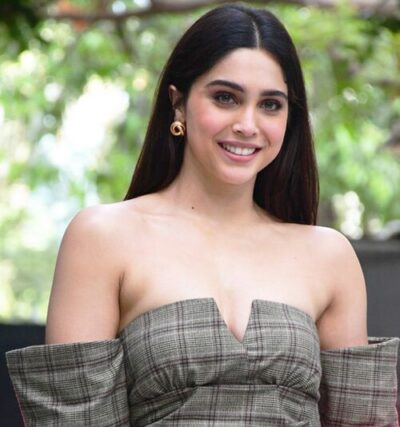
Sharvari is an Indian actress. Born June 14, 1996, in Mumbai. Awards include Filmfare Award for Best Female Debut.
Facts
6 facts · 0 confirmed by two sources · 2 cited · 3 from one source · 1 where the sources disagree
What’s different
- Born: we show June 14, 1996 (Sources disagree). Wikipedia says June 14, 1997
Where this comes from
Papalocal keeps its own record. It started from these sources; what each one said is kept here as it was copied, so a change on their side never changes this page by itself. Tap one to read its version.
What Wikidata says · copied November 18, 2026 · revision 2570563284
- Described as
- Indian actress
- Other names
- Sharvari Wagh
- Born
- June 14, 1996 · 1 reference
- Born in
- Mumbai · 1 reference
- Citizen of
- India
- Occupation
- actor
- Awards
- Filmfare Award for Best Female Debut (2022) · 1 reference
- Height
- 1.68 m (5 ft 6 in)
- Wikipedias with a page
- 23
Wikidata item Q109238721 (wikidata.org/wiki/Q109238721), public domain (CC0). Copied November 18, 2026.
What Wikipedia says · copied November 18, 2026 · revision 1385949486
Sharvari Wagh (born 14 June 1997), known mononymously as Sharvari, is an Indian actress who works in Hindi films. She began her career as an assistant director for Luv Ranjan and Sanjay Leela Bhansali in 2015, before making her acting debut with Kabir Khan's war drama series The Forgotten Army - Azaadi Ke Liye (2020).
Sharvari ventured into films with Yash Raj Films's comedy Bunty Aur Babli 2 (2021), which won her the Filmfare Award for Best Female Debut. She achieved her breakthrough with the commercially successful comedy horror film Munjya in 2024 and has since starred in Imtiaz Ali's romantic drama Main Vaapas Aaunga (2026).
- Born, in its opening lines
- June 14, 1997
From the Wikipedia article “Sharvari” (en.wikipedia.org/wiki/Sharvari), by its contributors, under CC BY-SA 4.0 (creativecommons.org/licenses/by-sa/4.0/). Copied November 18, 2026; not changed.
Confirmed Two sources agree. Cited One source, and it names where it got it. One source One source, without a reference of its own. Sources disagree The sources disagree. We show the best-supported value and keep theirs below.
