
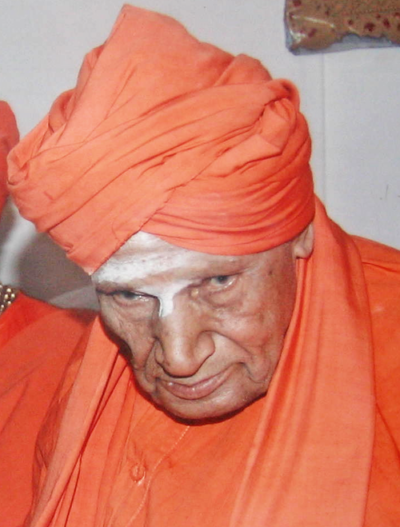
Shivakumara Swamiji
Shivakumara Swamiji was an Indian saint. Born April 1, 1907, in Magadi. Died January 21, 2019, in Tumkur. Educated at Central College of Bengaluru. Awards include Padma Bhushan.
Facts
11 facts · 2 confirmed by two sources · 0 cited · 9 from one source
Where this comes from
Papalocal keeps its own record. It started from these sources; what each one said is kept here as it was copied, so a change on their side never changes this page by itself. Tap one to read its version.
What Wikidata says · copied November 18, 2026 · revision 2564402118
- Described as
- Indian saint (1907–2019)
- Other names
- Shivakumara Swami, Sri Shivakumara Swamy
- Born
- April 1, 1907
- Died
- January 21, 2019 · 1 reference
- Born in
- Magadi
- Died in
- Tumkur
- Name at birth
- ಶಿವಣ್ಣ
- Citizen of
- India; British Raj
- Occupation
- religious leader
- Education
- Central College of Bengaluru
- Awards
- Padma Bhushan
- Religion
- Lingayatism
- Wikipedias with a page
- 23
Wikidata item Q3694565 (wikidata.org/wiki/Q3694565), public domain (CC0). Copied November 18, 2026.
What Wikipedia says · copied November 18, 2026 · revision 1383841820
Shivakumara Swami (born Shivanna; 1 April 1907 – 21 January 2019) was an Indian humanitarian, spiritual leader, educator and supercentenarian. He was a Hindu Veerashaiva (Lingayatism ) religious figure. Swami joined the Siddaganga Matha in 1930 and became head seer in 1941. Described as the most esteemed adherent of Lingayatism (Veerashaivism), he was referred to as Nadedaaduva Devaru (walking God) in the state. In 2015, Dr Shivakumara Swamiji was awarded by the government of India the Padma Bhushan, India's third highest civilian award.
- Born, in its opening lines
- April 1, 1907
- Died, in its opening lines
- January 21, 2019
From the Wikipedia article “Shivakumara Swami” (en.wikipedia.org/wiki/Shivakumara_Swami), by its contributors, under CC BY-SA 4.0 (creativecommons.org/licenses/by-sa/4.0/). Copied November 18, 2026; not changed.
Confirmed Two sources agree. Cited One source, and it names where it got it. One source One source, without a reference of its own. Sources disagree The sources disagree. We show the best-supported value and keep theirs below.
