
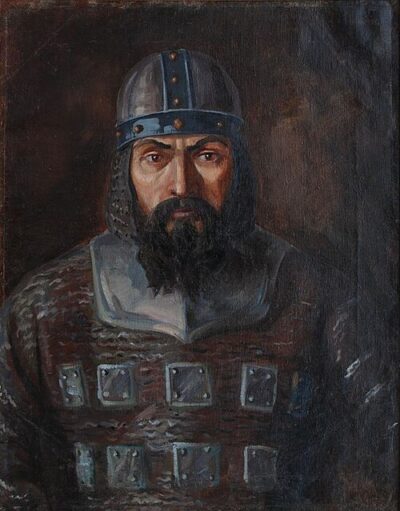
Shvarn
Shvarn was a Grand Duke of Lithuania. Born 1230, in Halych. Died 1269, in Chełm. Positions held include knyaz and Grand Duke of Lithuania (1267–1269).
Facts
14 facts · 0 confirmed by two sources · 0 cited · 13 from one source · 1 where the sources disagree
What’s different
- Died: we show 1269 (Sources disagree). Wikidata also lists 1270
Where this comes from
Papalocal keeps its own record. It started from these sources; what each one said is kept here as it was copied, so a change on their side never changes this page by itself. Tap one to read its version.
What Wikidata says · copied November 16, 2026 · revision 2569274035
- Described as
- Grand Duke of Lithuania
- Other names
- Shvarno, Shvarn Daniilovich, Svaromir Daniilovich
- Born
- 1230 · 1 reference
- Died
- 1270; 1269 · 2 references
- Born in
- Halych · 1 reference
- Died in
- Chełm · 1 reference
- Buried in
- Chełm · 1 reference
- Occupation
- monarch · 2 references; royalty · 1 reference
- Positions held
- knyaz; Grand Duke of Lithuania (1267–1269)
- Spouse
- Ne · 1 reference
- Father
- Daniel of Galicia · 3 references
- Mother
- Anna Mstislavna of Novgorod · 1 reference
- Siblings
- Lev I of Galicia; Irakli Danylovich · 1 reference
- Wikipedias with a page
- 28
Wikidata item Q324493 (wikidata.org/wiki/Q324493), public domain (CC0). Copied November 16, 2026.
What Wikipedia says · copied November 16, 2026 · revision 1352828074
Shvarn or Shvarno (Old Ruthenian: Шварно; Lithuanian: Švarnas; Belarusian: Шварн Данілавіч; Ukrainian: Шварно Данилович, romanized: Shvarno Danylovych; c. 1230 – c. 1269) was Grand Duke of Lithuania from 1267 to 1269. He was also the prince of Chełm from 1264 to 1269. An influential leader, he became involved in internal struggles of power within the neighboring Grand Duchy of Lithuania.
From the Wikipedia article “Shvarn” (en.wikipedia.org/wiki/Shvarn), by its contributors, under CC BY-SA 4.0 (creativecommons.org/licenses/by-sa/4.0/). Copied November 16, 2026; not changed.
Confirmed Two sources agree. Cited One source, and it names where it got it. One source One source, without a reference of its own. Sources disagree The sources disagree. We show the best-supported value and keep theirs below.
