
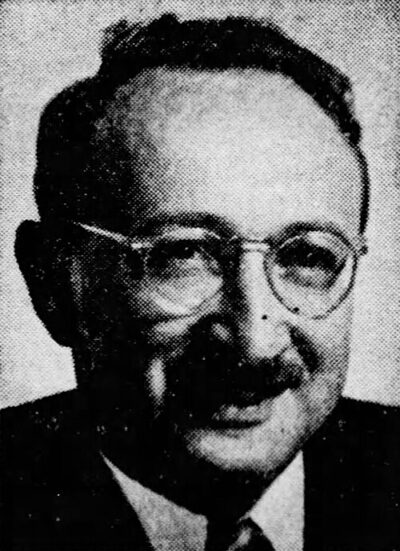
Sidney Hook
Sidney Hook was an American philosopher. Born December 20, 1902, in New York City. Died July 12, 1989, in Stanford. Educated at City College of New York and Columbia University. Awards include Guggenheim Fellowship, Jefferson Lecture and Presidential Medal of Freedom.
Facts
19 facts · 2 confirmed by two sources · 10 cited · 7 from one source
Where this comes from
Papalocal keeps its own record. It started from these sources; what each one said is kept here as it was copied, so a change on their side never changes this page by itself. Tap one to read its version.
What Wikidata says · copied November 16, 2026 · revision 2556999385
- Described as
- American philosopher (1902–1989)
- Born
- December 20, 1902 · 4 references
- Died
- July 12, 1989 · 4 references
- Born in
- New York City · 2 references
- Died in
- Stanford · 3 references
- Citizen of
- United States · 2 references
- Occupation
- philosopher · 2 references; university teacher; writer · 3 references
- Worked for
- New York University · 1 reference
- Education
- City College of New York · 1 reference; Columbia University (–1927) · 1 reference
- Member of
- American Academy of Arts and Sciences
- Awards
- Guggenheim Fellowship (1928) · 1 reference; Jefferson Lecture (1984); Presidential Medal of Freedom (1985) · 1 reference; Fellow of the Committee for Skeptical Inquiry; Fellow of the American Academy of Arts and Sciences
- Lived in
- Stanford (–1989); Brooklyn
- Wikipedias with a page
- 20
Wikidata item Q947456 (wikidata.org/wiki/Q947456), public domain (CC0). Copied November 16, 2026.
What Wikipedia says · copied November 16, 2026 · revision 1385508192
Sidney Hook (December 20, 1902 – July 12, 1989) was an American philosopher of pragmatism known for his contributions to the philosophy of history, the philosophy of education, political theory, and ethics. After embracing communism in his youth, Hook was later known for his criticisms of totalitarianism, both fascism and communism. A social democrat, Hook sometimes cooperated with conservatives, particularly in opposing Marxism–Leninism. After World War II, he argued that members of such groups as the Communist Party USA and Leninists like democratic centralists could ethically be barred from holding the offices of public trust because they called for the violent overthrow of democratic governments.
- Born, in its opening lines
- December 20, 1902
- Died, in its opening lines
- July 12, 1989
From the Wikipedia article “Sidney Hook” (en.wikipedia.org/wiki/Sidney_Hook), by its contributors, under CC BY-SA 4.0 (creativecommons.org/licenses/by-sa/4.0/). Copied November 16, 2026; not changed.
Confirmed Two sources agree. Cited One source, and it names where it got it. One source One source, without a reference of its own. Sources disagree The sources disagree. We show the best-supported value and keep theirs below.
