
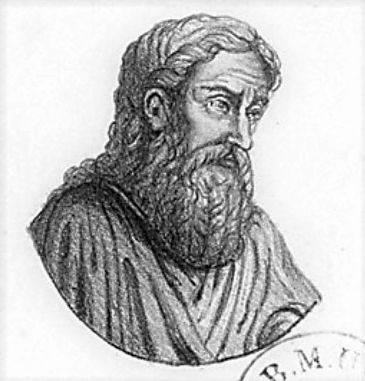
Sidonius Apollinaris
Sidonius Apollinaris was a Gaulish poet, aristocrat and bishop. Born November 5, 430, in Lugdunum. Died 489, in Arvernis. Positions held include Praefectus urbi (468–469), bishop of Auvergne (471–486) and ancient Roman senator. Known for Vita Aniani, History and Correspondence.
Facts
21 facts · 1 confirmed by two sources · 3 cited · 16 from one source · 1 where the sources disagree
What’s different
- Died: we show 489 (Sources disagree). Wikipedia says 481
Where this comes from
Papalocal keeps its own record. It started from these sources; what each one said is kept here as it was copied, so a change on their side never changes this page by itself. Tap one to read its version.
What Wikidata says · copied November 16, 2026 · revision 2567827471
- Described as
- Gaulish poet, aristocrat and bishop (430-489)
- Other names
- Gaius Sollius Modestus Apollinaris Sidonius, Gaius Sollius Apollinaris Sidoniu, Saint Sidonius Apollinaris, Apollinaris Sidonius
- Born
- November 5, 430
- Died
- 489
- Born in
- Lugdunum · 1 reference
- Died in
- Arvernis
- Citizen of
- Ancient Rome
- Occupation
- politician; Catholic priest; poet; writer · 1 reference
- Positions held
- Praefectus urbi (468–469); bishop of Auvergne (471–486); ancient Roman senator; Roman Catholic Bishop of Clermont · 1 reference
- Known for
- Vita Aniani; History; Correspondence; Carmina
- Spouse
- Papianilla
- Children
- Apollinaris of Clermont
- Father
- Father of Sidonius Apollinaris
- Religion
- Christianity
- Wikipedias with a page
- 53
Wikidata item Q302936 (wikidata.org/wiki/Q302936), public domain (CC0). Copied November 16, 2026.
What Wikipedia says · copied November 16, 2026 · revision 1385568566
Gaius Sollius Modestus Apollinaris Sidonius, better known as Sidonius Apollinaris (5 November, c. 430 – 481/490 AD), was a poet, diplomat, and bishop. Born into the Gallo-Roman aristocracy, he was son-in-law of Emperor Avitus and was appointed Urban prefect of Rome by Emperor Anthemius in 468. In 469 he was appointed Bishop of Clermont and he led the defence of the city against attacks from the armies of Euric, King of the Visigoths, from 473 to 475. He regained his position as bishop, after the city's conquest, and retained it until his death in the 480s. He is venerated as a saint in the Catholic church, the Orthodox Church, and the True Orthodox Church, with his feast day on 21 August.
Sidonius wrote significant poetry, including panegyrics on different emperors, for which he was honored in his time: with a bronze statue in the libraries of Trajan's Forum, as comes, and by being made Patrician and Senator. A large number of his letters also survive, making him "the single most important surviving author from 5th-century Gaul" according to Eric Goldberg. He is one of four Gallo-Roman aristocrats of the 5th- to 6th-century whose correspondence survives in quantity; the others are Ruricius, bishop of Limoges (died 507); Alcimus Ecdicius Avitus, bishop of Vienne (died 518); and Magnus Felix Ennodius of Arles, bishop of Ticinum (died 534). All of them were linked in the tightly bound aristocratic Gallo-Roman network that provided the bishops of Catholic Gaul at the time. His writing is characterised by an extremely dense network of classical and biblical allusions, which was central to his self-presentation as a Roman aristocrat in a Western Roman Empire in decline.
- Born, in its opening lines
- 430
- Died, in its opening lines
- 481
From the Wikipedia article “Sidonius Apollinaris” (en.wikipedia.org/wiki/Sidonius_Apollinaris), by its contributors, under CC BY-SA 4.0 (creativecommons.org/licenses/by-sa/4.0/). Copied November 16, 2026; not changed.
Confirmed Two sources agree. Cited One source, and it names where it got it. One source One source, without a reference of its own. Sources disagree The sources disagree. We show the best-supported value and keep theirs below.
