
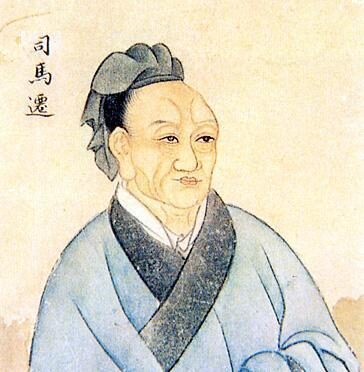
Sima Qian
Sima Qian was a Chinese historian (c. 145 – c. 86 BCE). Born 145 BC, in Hejin. Died 86 BC, in People's Republic of China. Known for Records of the Grand Historian.
Facts
17 facts · 0 confirmed by two sources · 5 cited · 12 from one source
Where this comes from
Papalocal keeps its own record. It started from these sources; what each one said is kept here as it was copied, so a change on their side never changes this page by itself. Tap one to read its version.
What Wikidata says · copied November 16, 2026 · revision 2564984935
- Described as
- Chinese historian (c. 145 – c. 86 BCE)
- Other names
- Father of History, Sima Chin, Ssu-ma Chien, Zichang, Sze-ma Ts'ien, Ssu-ma Ch'ien, Sze-ma Tsien, Se-ma-tsien, Se-ma Tsien, Tai-se-kong, Taishigong, Dasima
- Born
- 145 BC · 1 reference
- Died
- 86 BC · 1 reference
- Born in
- Hejin
- Died in
- People's Republic of China · 1 reference
- Citizen of
- Western Han
- Occupation
- historian · 1 reference; poet; writer · 2 references; astrologer; philosopher · 1 reference; mathematician · 1 reference; astronomer · 1 reference
- Known for
- Records of the Grand Historian · 1 reference
- Field
- history of China
- Children
- Sima Qian's daughter (Yang Bis wife); Sima Lin · 1 reference
- Father
- Sima Tan
- Wikipedias with a page
- 144
Wikidata item Q9372 (wikidata.org/wiki/Q9372), public domain (CC0). Copied November 16, 2026.
What Wikipedia says · copied November 16, 2026 · revision 1384661697
Sima Qian (c. 145 BC – c. 86 BC) was a Chinese historian during the early Han dynasty. He is considered the father of Chinese historiography for the Shiji (sometimes translated into English as Records of the Grand Historian), a general history of China covering more than two thousand years from the rise of the legendary Yellow Emperor and formation of the first Chinese polity to the reign of Emperor Wu of Han, during which Sima wrote. As the first universal history of the world as it was known to the ancient Chinese, the Shiji served as a model for official histories for subsequent dynasties across the Sinosphere until the 20th century.
Sima Qian's father, Sima Tan, first conceived of the ambitious project of writing a complete history of China, but had completed only some preparatory sketches at the time of his death. After inheriting his father's position as court historian in the imperial court, he was determined to fulfill his father's dying wish of composing and putting together this epic work of history.
However, in 99 BC, he offended Emperor Wu by speaking in defense of the general Li Ling, whom Emperor Wu blamed for surrendering after an unsuccessful campaign against the Xiongnu. Given the choice of being executed or castrated, Sima chose the latter in order to finish his historical work. Although he is universally remembered for the Records, surviving works indicate that he was also a gifted poet and prose writer, and he was instrumental in the creation of the Taichu calendar, which was officially promulgated in 104 BC.
Sima was acutely aware of the importance of his work to posterity and its relationship to his own personal suffering. In the postface of the Records, he implicitly compared his universal history of China to the classics of his day, the Guoyu by Zuo Qiuming, "Li Sao" by Qu Yuan, and the Art of War by Sun Bin, pointing out that their authors all suffered great personal misfortunes before their lasting monumental works could come to fruition. Sima Qian is also depicted in the Wu Shuang Pu by Jin Guliang.
From the Wikipedia article “Sima Qian” (en.wikipedia.org/wiki/Sima_Qian), by its contributors, under CC BY-SA 4.0 (creativecommons.org/licenses/by-sa/4.0/). Copied November 16, 2026; not changed.
Confirmed Two sources agree. Cited One source, and it names where it got it. One source One source, without a reference of its own. Sources disagree The sources disagree. We show the best-supported value and keep theirs below.
