
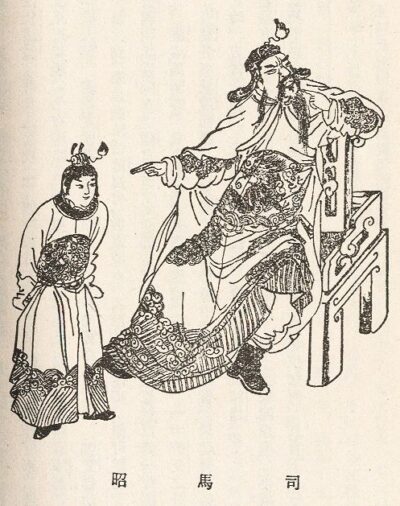
Sima Zhao was a Cao Wei regent. Born 211, in China. Died September 6, 265, in China. Positions held include regent.
Facts
31 facts · 2 confirmed by two sources · 6 cited · 23 from one source
Where this comes from
Papalocal keeps its own record. It started from these sources; what each one said is kept here as it was copied, so a change on their side never changes this page by itself. Tap one to read its version.
What Wikidata says · copied November 17, 2026 · revision 2553946541
- Described as
- Cao Wei regent
- Other names
- Sima Chiu
- Born
- 211
- Died
- September 6, 265
- Born in
- China
- Died in
- China
- Citizen of
- China; Cao Wei · 1 reference; Western Jin dynasty · 1 reference
- Occupation
- statesperson
- Positions held
- regent
- Spouse
- Wang Yuanji · 1 reference
- Children
- Emperor Wu of Jin · 1 reference; Sima Zhao; Sima Dingguo; Sima Guangde; Sima Yanzuo; Sima Yongzuo; Sima Jian; Sima You · 2 references; Sima Ji
- Father
- Sima Yi · 1 reference
- Mother
- Zhang Chunhua
- Siblings
- Princess Gaoliu; Princess Nanyang; Sima Lun; Sima Zhou; Sima Shi; Sima Gan; Sima Rong; Sima Jun; Sima Liang; Sima Jing
- Wikipedias with a page
- 24
Wikidata item Q532884 (wikidata.org/wiki/Q532884), public domain (CC0). Copied November 17, 2026.
What Wikipedia says · copied November 17, 2026 · revision 1386318595
Sima Zhao () (Chinese: 司馬昭; pinyin: Sīmǎ Zhāo; 211 – 6 September 265), courtesy name Zishang (子上), was a Chinese military general, politician, and regent of the state of Cao Wei during the Three Kingdoms period of China.
Sima Zhao capably maintained control of Wei, which had been seized by his father Sima Yi and previously maintained by his older brother Sima Shi, successfully crushing all internal opposition in the form of dissent and rebellion. In 263, despite opposition, he decided to take advantage of the present weakness in Shu Han to the west and launched an invasion against it, which eventually managed to convince its emperor, Liu Shan, towards formally surrendering, tipping the decades-long established balance of power decisively in Wei's favor. Towards the end of the campaign, he had himself created the Duke of Jin and accepted the Nine bestowments—a step that put him closer to usurpation of the throne—although he never actually ascended the throne, having further styled himself the King of Jin in 264, and then died in 265. His military credit and successful grip on the political scene helped to set up the plot of overthrowing Wei by his son, Sima Yan, who usurped the Wei throne and proclaimed the Jin dynasty with himself as its emperor in 266. After the establishment of Jin, Sima Yan posthumously honoured his father as Emperor Wen of Jin (晉文帝), with the temple name of Taizu (太祖).
A Chinese idiom involving and inspired by Sima Zhao states that "Everyone on the street knows what's in Sima Zhao's mind" (司馬昭之心, 路人皆知), meaning that a person's supposed hidden intention (in this case, usurping the throne) is so well known that it is not really hidden. It came from a quote by Cao Mao, fourth emperor of Wei, who launched an unsuccessful uprising against Sima Zhao in an attempt to take back imperial power.
- Born, in its opening lines
- 211
- Died, in its opening lines
- September 6, 265
From the Wikipedia article “Sima Zhao” (en.wikipedia.org/wiki/Sima_Zhao), by its contributors, under CC BY-SA 4.0 (creativecommons.org/licenses/by-sa/4.0/). Copied November 17, 2026; not changed.
Confirmed Two sources agree. Cited One source, and it names where it got it. One source One source, without a reference of its own. Sources disagree The sources disagree. We show the best-supported value and keep theirs below.
