
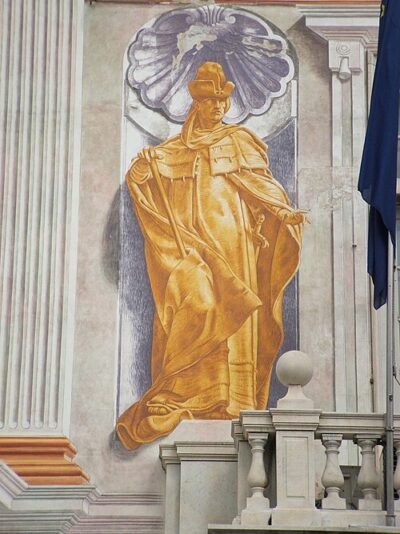
Simone Boccanegra was a Genoese doge. Born 1301, in Genoa. Died March 14, 1363, in Genoa. Positions held include Doge of Genoa (2 times) (1339–1363).
Facts
10 facts · 0 confirmed by two sources · 1 cited · 9 from one source
Where this comes from
Papalocal keeps its own record. It started from these sources; what each one said is kept here as it was copied, so a change on their side never changes this page by itself. Tap one to read its version.
What Wikidata says · copied November 18, 2026 · revision 2500477170
- Described as
- Genoese doge (1301-1363)
- Born
- 1301
- Died
- March 14, 1363 · 1 reference
- Born in
- Genoa
- Died in
- Genoa
- Cause of death
- poison
- Citizen of
- Republic of Genoa
- Occupation
- politician
- Positions held
- Doge of Genoa (2 times) (1339–1363)
- Political party
- Ghibellines
- Siblings
- Egidio Boccanegra
- Wikipedias with a page
- 20
Wikidata item Q1974438 (wikidata.org/wiki/Q1974438), public domain (CC0). Copied November 18, 2026.
What Wikipedia says · copied November 18, 2026 · revision 1383346291
Simone Boccanegra (Italian: [siˈmoːne ˌbokkaˈneːɡra]; Ligurian: Scimon Boccaneigra [ʃiˈmuŋ ˌbukːaˈnejɡɾa]; died 1363) was the first Doge of Genoa. He became doge in 1339, but was ousted from power six years later. He regained the position in 1356, retaining it until his death in 1363.
His story was popularized by Antonio García Gutiérrez's 1843 play Simón Bocanegra and Giuseppe Verdi's 1857 opera Simon Boccanegra.
From the Wikipedia article “Simone Boccanegra” (en.wikipedia.org/wiki/Simone_Boccanegra), by its contributors, under CC BY-SA 4.0 (creativecommons.org/licenses/by-sa/4.0/). Copied November 18, 2026; not changed.
Confirmed Two sources agree. Cited One source, and it names where it got it. One source One source, without a reference of its own. Sources disagree The sources disagree. We show the best-supported value and keep theirs below.
