
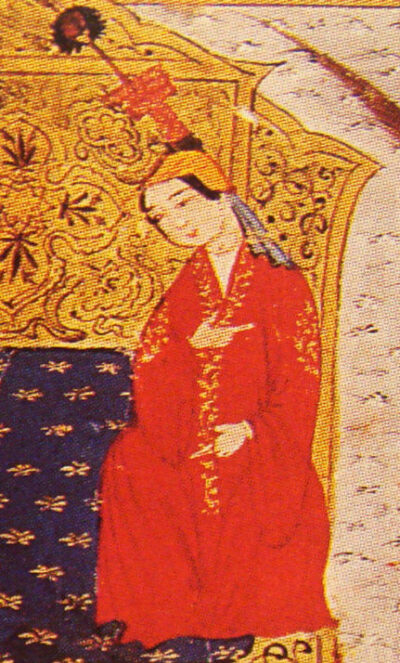
Sorghaghtani Beki
Sorghaghtani Beki was a Mongol empress. Born February 2, 1190, in Mongol Empire. Died March 1, 1252.
Facts
17 facts · 1 confirmed by two sources · 0 cited · 14 from one source · 2 where the sources disagree
What’s different
- Born: we show February 2, 1190 (Sources disagree). Wikipedia says c. 1199
- Buried in: we show Blue Dome (Maragheh) (Sources disagree). Wikidata also lists Gansu
Where this comes from
Papalocal keeps its own record. It started from these sources; what each one said is kept here as it was copied, so a change on their side never changes this page by itself. Tap one to read its version.
What Wikidata says · copied November 16, 2026 · revision 2532166339
- Described as
- Mongol empress (1190-1252)
- Other names
- Sorghagtani Beki, Soghaghtani Beki, Sorqoqtani-Beki
- Born
- February 2, 1190
- Died
- March 1, 1252
- Born in
- Mongol Empire
- Buried in
- Gansu; Blue Dome (Maragheh) · 1 reference
- Citizen of
- Mongol Empire
- Occupation
- politician
- Spouse
- Tolui
- Children
- Möngke Khan; Kublai Khan; Hulegu Khan; Ariq Böke; Yesubuhua
- Father
- Jakha Gambhu
- Mother
- Wasai
- Siblings
- Ibaqa beki; Katerina Bekhi
- Religion
- Nestorianism
- Wikipedias with a page
- 29
Wikidata item Q271016 (wikidata.org/wiki/Q271016), public domain (CC0). Copied November 16, 2026.
What Wikipedia says · copied November 16, 2026 · revision 1368287362
Surqaghtani Beki (or simply Bekhi; c. 1199 – 1 March 1252 ), posthumously Empress Xianyi Zhuangsheng, was a Keraite princess and daughter-in-law of Genghis Khan. Married to Tolui, Genghis' youngest son, Sorghaghtani became one of the most powerful and competent people in the Mongol Empire. She made policy decisions at a pivotal moment that led to the transition of the Mongol Empire towards a more cosmopolitan and sophisticated style of administration. She raised her sons to be leaders and maneuvered the family politics so that all four of her sons, Möngke Khan, Hulagu Khan, Ariq Böke, and Kublai Khan, went on to inherit the legacy of their grandfather.
Given her considerable influence at a critical juncture in the history of the Mongol Empire, Sorghaghtani Beki is widely regarded as one of the most influential and powerful women of the medieval era. Sorghaghtani was a Christian and a member of the Church of the East, a denomination often, though imprecisely, referred to in Western scholarship as “Nestorianism”. As a leading political figure within the imperial establishment, she played a significant role in shaping policies that facilitated the expansion of trade networks and the promotion of intellectual and cultural exchange across Mongol territories, which together formed the largest contiguous land empire in world history.
- Born, in its opening lines
- c. 1199
- Died, in its opening lines
- March 1, 1252
From the Wikipedia article “Sorghaghtani Beki” (en.wikipedia.org/wiki/Sorghaghtani_Beki), by its contributors, under CC BY-SA 4.0 (creativecommons.org/licenses/by-sa/4.0/). Copied November 16, 2026; not changed.
Confirmed Two sources agree. Cited One source, and it names where it got it. One source One source, without a reference of its own. Sources disagree The sources disagree. We show the best-supported value and keep theirs below.
