
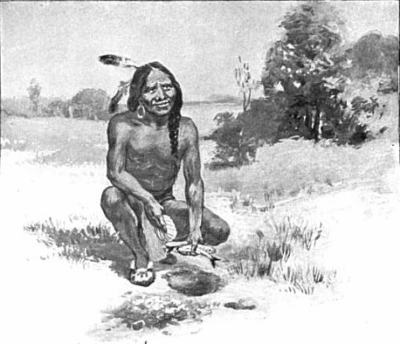
Squanto was a Native American contact of the Pilgrims. Born 1585, in Patuxet tribe. Died November 30, 1622, in Chatham.
Facts
8 facts · 0 confirmed by two sources · 2 cited · 6 from one source
Where this comes from
Papalocal keeps its own record. It started from these sources; what each one said is kept here as it was copied, so a change on their side never changes this page by itself. Tap one to read its version.
What Wikidata says · copied November 16, 2026 · revision 2567149406
- Described as
- Native American contact of the Pilgrims
- Other names
- Tisquantum, Tasquantum, Tusquantum
- Born
- 1585 · 1 reference
- Died
- November 30, 1622 · 1 reference
- Born in
- Patuxet tribe
- Died in
- Chatham
- Buried in
- Massachusetts
- Citizen of
- Colony of Virginia
- Occupation
- interpreter · 1 reference; guide
- Wikipedias with a page
- 29
Wikidata item Q711498 (wikidata.org/wiki/Q711498), public domain (CC0). Copied November 16, 2026.
What Wikipedia says · copied November 16, 2026 · revision 1385407068
Tisquantum (; c. 1585 (±10 years?) – November 30, 1622 O.S.), more commonly known as Squanto (), was a member of the Patuxet tribe of Wampanoags, best known for being an early liaison between the Native American population in Southern New England and the Mayflower Pilgrims who made their settlement at the site of Tisquantum's former summer village, now Plymouth, Massachusetts.
In 1614, Tisquantum was kidnapped by English sea captain Thomas Hunt, who trafficked him to Spain, selling him in the city of Málaga. He and several other captives were said to have been ransomed by local Franciscan friars who focused on the captives' education and evangelization. Having learned English during his captivity, he eventually travelled to England and managed to find a way back across the Atlantic. He arrived back to his native village in America in 1619, only to find that he had become the last of the Patuxet, as his tribe had been wiped out by epidemic; so he then went to live with the Wampanoags.
The Mayflower landed in Cape Cod Bay in 1620, and Tisquantum worked to broker peaceable relations between the Pilgrims and the local Pokanokets. He played a crucial role in the early meetings in March 1621, partly because he could speak English. He then lived with the Pilgrims for 20 months as an interpreter, guide, and advisor. He introduced the settlers to the fur trade and taught them how to sow and fertilize native crops; this proved vital because the seeds the Pilgrims had brought from England mostly failed. As food shortages worsened, Plymouth Colony governor William Bradford relied on Tisquantum to pilot a ship of settlers on a trading expedition around Cape Cod and through dangerous shoals. During that voyage, Tisquantum contracted what Bradford called an "Indian fever". Bradford stayed with him for several days until he died, which Bradford described as a "great loss".
From the Wikipedia article “Squanto” (en.wikipedia.org/wiki/Squanto), by its contributors, under CC BY-SA 4.0 (creativecommons.org/licenses/by-sa/4.0/). Copied November 16, 2026; not changed.
Confirmed Two sources agree. Cited One source, and it names where it got it. One source One source, without a reference of its own. Sources disagree The sources disagree. We show the best-supported value and keep theirs below.
