
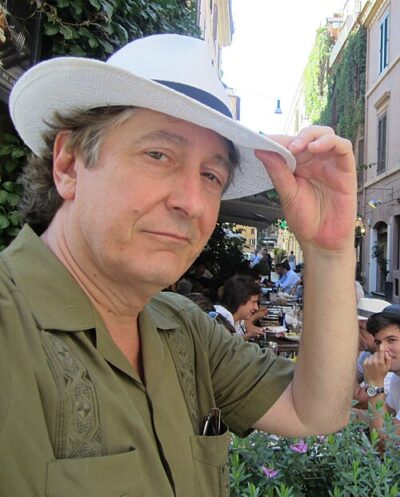
Stan Ridgway
Stan Ridgway is an American singer-songwriter and film and television composer. Born April 5, 1954, in Barstow. Educated at Pasadena City College.
Facts
22 facts · 1 confirmed by two sources · 3 cited · 18 from one source
Where this comes from
Papalocal keeps its own record. It started from these sources; what each one said is kept here as it was copied, so a change on their side never changes this page by itself. Tap one to read its version.
What Wikidata says · copied November 18, 2026 · revision 2569043379
- Described as
- American singer-songwriter and film and television composer
- Other names
- Stanard Ridgway Funsten, Stanard R. Funsten, Stanard "Stan" Ridgway
- Born
- April 5, 1954
- Born in
- Barstow
- Name at birth
- Stanard Ridgway Funsten III · 1 reference
- Citizen of
- United States
- Occupation
- singer-songwriter; composer · 1 reference; singer; banjoist; guitarist · 1 reference; recording artist · 1 reference; musician · 1 reference
- Education
- Pasadena City College
- Member of
- Wall of Voodoo (1977–1983); Drywall
- Genre
- new wave
- Instrument
- banjo; guitar; voice
- Record label
- I.R.S. Records; Restless Records
- Spouse
- Pietra Wexstun (1981–) · 1 reference
- Website
- http://www.stanridgway.com/
- Wikipedias with a page
- 14
Wikidata item Q50825 (wikidata.org/wiki/Q50825), public domain (CC0). Copied November 18, 2026.
What Wikipedia says · copied November 18, 2026 · revision 1377770209
Stanard Ridgway (born April 5, 1954) is an American singer-songwriter, and film and television composer known for his distinctive voice, dramatic lyrical narratives, and eclectic solo albums. He was the original lead singer and a founding member of the band Wall of Voodoo.
- Born, in its opening lines
- April 5, 1954
From the Wikipedia article “Stan Ridgway” (en.wikipedia.org/wiki/Stan_Ridgway), by its contributors, under CC BY-SA 4.0 (creativecommons.org/licenses/by-sa/4.0/). Copied November 18, 2026; not changed.
Confirmed Two sources agree. Cited One source, and it names where it got it. One source One source, without a reference of its own. Sources disagree The sources disagree. We show the best-supported value and keep theirs below.
