
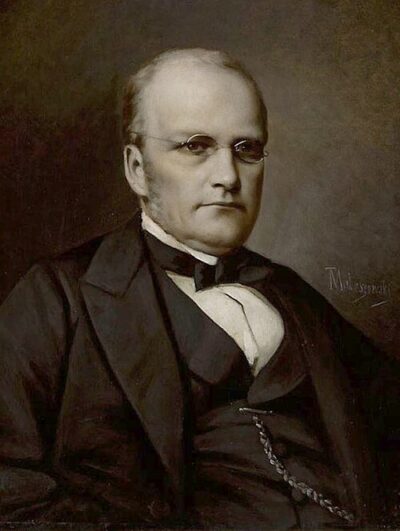
Stanisław Moniuszko
Stanisław Moniuszko was a Polish composer. Born May 5, 1819, in Ubieĺ. Died June 4, 1872, in Warsaw. Known for Halka. Educated at Minsk men's gymnasium.
Facts
29 facts · 1 confirmed by two sources · 10 cited · 17 from one source · 1 where the sources disagree
What’s different
- Born: we show May 5, 1819 (Sources disagree). Wikipedia says May 17, 1819
Where this comes from
Papalocal keeps its own record. It started from these sources; what each one said is kept here as it was copied, so a change on their side never changes this page by itself. Tap one to read its version.
What Wikidata says · copied November 16, 2026 · revision 2558243694
- Described as
- Polish composer (1819–1872)
- Born
- May 5, 1819 · 12 references
- Died
- June 4, 1872 · 7 references
- Born in
- Ubieĺ · 4 references
- Died in
- Warsaw · 6 references
- Buried in
- Powązki Cemetery
- Cause of death
- myocardial infarction
- Citizen of
- Russian Empire
- Occupation
- composer · 3 references; conductor · 2 references; musicologist; music educator; university teacher · 1 reference; music teacher · 2 references
- Worked for
- Chopin University of Music
- Education
- Minsk men's gymnasium
- Member of
- Towarzystwo Naukowe Krakowskie · 1 reference
- Genre
- opera
- Instrument
- organ; pipe organ · 1 reference
- Known for
- Halka
- Field
- art music · 1 reference; music composing · 1 reference
- Spouse
- Aleksandra Müller
- Children
- Jan Czesław Moniuszko; Elżbieta Moniuszko-Nawroczyńska · 1 reference; Bolesław Moniuszko
- Father
- Czesław Moniuszko · 1 reference
- Mother
- Elżbieta Madziarska · 1 reference
- Lived in
- Saint Petersburg · 1 reference
- Wikipedias with a page
- 52
Wikidata item Q217613 (wikidata.org/wiki/Q217613), public domain (CC0). Copied November 16, 2026.
What Wikipedia says · copied November 16, 2026 · revision 1384419671
Stanisław Moniuszko (Polish: [stãˈɲiswaf mɔ̃ˈɲuʃkɔ] ; 17 May [O.S. 5 May] 1819 – June 4, 1872) was a Polish composer, conductor, organist and pedagogue. He wrote many popular art songs and operas, including The Haunted Manor and Halka, and his music is filled with patriotic folk themes of the peoples of the former Polish–Lithuanian Commonwealth (mainly Poles, Lithuanians and Belarusians). He is generally referred to as "the father of Polish national opera". Since the 1990s, Stanisław Moniuszko has been recognized in Belarus as an important figure to Belarusian culture as well.
- Born, in its opening lines
- May 17, 1819
- Died, in its opening lines
- June 4, 1872
From the Wikipedia article “Stanisław Moniuszko” (en.wikipedia.org/wiki/Stanisław_Moniuszko), by its contributors, under CC BY-SA 4.0 (creativecommons.org/licenses/by-sa/4.0/). Copied November 16, 2026; not changed.
Confirmed Two sources agree. Cited One source, and it names where it got it. One source One source, without a reference of its own. Sources disagree The sources disagree. We show the best-supported value and keep theirs below.
