
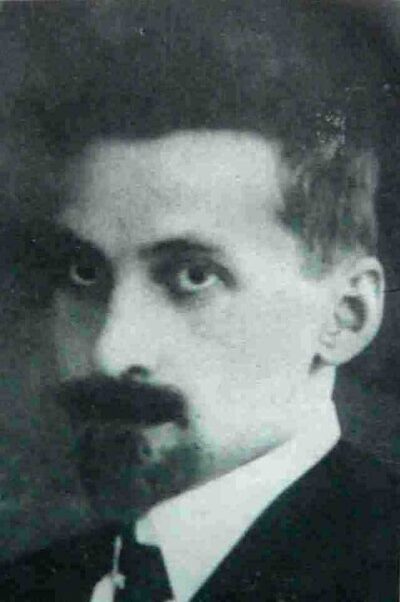
Stefan Grabiński
Stefan Grabiński was a Polish writer. Born February 26, 1887, in Kamianka-Buzka. Died November 12, 1936, in Lviv. Educated at Faculty of Philology of the University of Lviv.
Facts
16 facts · 2 confirmed by two sources · 4 cited · 10 from one source
Where this comes from
Papalocal keeps its own record. It started from these sources; what each one said is kept here as it was copied, so a change on their side never changes this page by itself. Tap one to read its version.
What Wikidata says · copied November 18, 2026 · revision 2557157544
- Described as
- Polish writer (1887-1936)
- Born
- February 26, 1887 · 3 references
- Died
- November 12, 1936 · 3 references
- Born in
- Kamianka-Buzka
- Died in
- Lviv · 1 reference
- Buried in
- Yanivsky cemetery · 1 reference
- Cause of death
- tuberculosis
- Name at birth
- Stefan Grabiński
- Citizen of
- Second Polish Republic; Austria–Hungary
- Occupation
- writer · 1 reference; science fiction writer; teacher · 1 reference
- Education
- Faculty of Philology of the University of Lviv
- Genre
- speculative fiction
- Field
- literature · 1 reference
- Siblings
- Maria Czaykowska
- Wikipedias with a page
- 21
Wikidata item Q721032 (wikidata.org/wiki/Q721032), public domain (CC0). Copied November 18, 2026.
What Wikipedia says · copied November 18, 2026 · revision 1380161408
Stefan Grabiński (26 February 1887 – 12 November 1936) was a Polish writer of fantastic literature and horror stories. He was very interested in parapsychology, magic and demonology and in the works of the German Expressionist filmmakers. He is sometimes likened to Edgar Allan Poe and H. P. Lovecraft, although his works are often surreal or explicitly erotic in a way that sets him apart from both.
- Born, in its opening lines
- February 26, 1887
- Died, in its opening lines
- November 12, 1936
From the Wikipedia article “Stefan Grabiński” (en.wikipedia.org/wiki/Stefan_Grabiński), by its contributors, under CC BY-SA 4.0 (creativecommons.org/licenses/by-sa/4.0/). Copied November 18, 2026; not changed.
Confirmed Two sources agree. Cited One source, and it names where it got it. One source One source, without a reference of its own. Sources disagree The sources disagree. We show the best-supported value and keep theirs below.
