
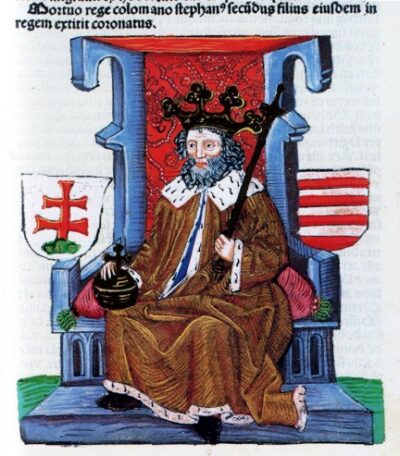
Stephen II of Hungary was a King of Hungary from 1116 to 1131. Born 1101, in Székesfehérvár. Died March 1, 1131, in Székesfehérvár. Positions held include Apostolic King of Hungary (1116–1131).
Facts
17 facts · 0 confirmed by two sources · 3 cited · 14 from one source
Where this comes from
Papalocal keeps its own record. It started from these sources; what each one said is kept here as it was copied, so a change on their side never changes this page by itself. Tap one to read its version.
What Wikidata says · copied November 16, 2026 · revision 2569068649
- Described as
- King of Hungary from 1116 to 1131
- Other names
- Stephen II
- Born
- 1101 · 1 reference
- Died
- March 1, 1131
- Born in
- Székesfehérvár
- Died in
- Székesfehérvár
- Buried in
- Székesfehérvár
- Cause of death
- dysentery
- Citizen of
- Hungary
- Occupation
- politician; monarch
- Positions held
- Apostolic King of Hungary (1116–1131) · 1 reference
- Political party
- politician before the emergence of political parties
- Spouse
- Cristiana of Capua; Adelaide of Riedenburg (1121–) · 1 reference
- Father
- Coloman · 1 reference
- Mother
- Felicia of Sicily
- Siblings
- Sophia
- Religion
- Christianity
- Wikipedias with a page
- 44
Wikidata item Q82448 (wikidata.org/wiki/Q82448), public domain (CC0). Copied November 16, 2026.
What Wikipedia says · copied November 16, 2026 · revision 1382934916
Stephen II (Hungarian: II. István; Croatian: Stjepan II.; Slovak: Štefan II.; 1101 – early 1131) was King of Hungary and Croatia from 1116 until 1131. His father, King Coloman, had him crowned as a child, thus denying the crown to his uncle Álmos. In the first year of his reign, Venice occupied Dalmatia and Stephen never restored his rule in that province. His reign was characterized by frequent wars with neighbouring countries.
From the Wikipedia article “Stephen II of Hungary” (en.wikipedia.org/wiki/Stephen_II_of_Hungary), by its contributors, under CC BY-SA 4.0 (creativecommons.org/licenses/by-sa/4.0/). Copied November 16, 2026; not changed.
Confirmed Two sources agree. Cited One source, and it names where it got it. One source One source, without a reference of its own. Sources disagree The sources disagree. We show the best-supported value and keep theirs below.
