
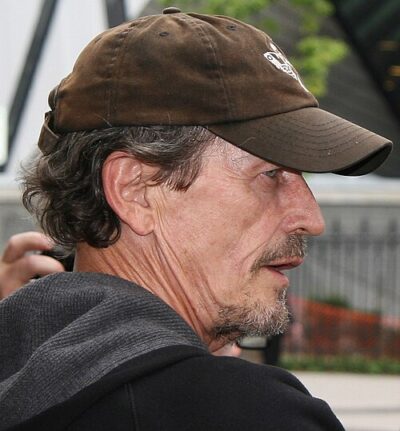
Stephen McHattie
Stephen McHattie is a Canadian actor. Born February 3, 1947, in Antigonish. Educated at American Academy of Dramatic Arts.
Facts
8 facts · 1 confirmed by two sources · 3 cited · 4 from one source
Where this comes from
Papalocal keeps its own record. It started from these sources; what each one said is kept here as it was copied, so a change on their side never changes this page by itself. Tap one to read its version.
What Wikidata says · copied November 15, 2026 · revision 2567703086
- Described as
- Canadian actor
- Other names
- Stephen McHattie Smith
- Born
- February 3, 1947 · 5 references
- Born in
- Antigonish · 1 reference
- Citizen of
- Canada
- Occupation
- actor · 1 reference; film actor; television actor
- Education
- American Academy of Dramatic Arts (–1968) · 1 reference
- Spouse
- Meg Foster
- Wikipedias with a page
- 24
Wikidata item Q1321265 (wikidata.org/wiki/Q1321265), public domain (CC0). Copied November 15, 2026.
What Wikipedia says · copied November 15, 2026 · revision 1375437931
Stephen McHattie Smith (born February 3, 1947) is a Canadian actor. Since beginning his professional career in 1970, he has amassed over 200 film, television, and theatre credits; and has collaborated with directors like Darren Aronofsky, Bruce McDonald, and David Cronenberg. He played Jimmy Murray on the CBC drama Emily of New Moon (1998-2000) and Sgt. Frank Coscarella on the police procedural Cold Squad (1999-2001).
He won the Genie Award for Best Supporting Actor for his performance as Dick Irvin in The Rocket, and was nominated for Best Actor for Pontypool. He was nominated for a Drama Desk Award for Yehoshua Sobol's Ghetto and won an Obie Award for Mensch Meier.
- Born, in its opening lines
- February 3, 1947
From the Wikipedia article “Stephen McHattie” (en.wikipedia.org/wiki/Stephen_McHattie), by its contributors, under CC BY-SA 4.0 (creativecommons.org/licenses/by-sa/4.0/). Copied November 15, 2026; not changed.
Confirmed Two sources agree. Cited One source, and it names where it got it. One source One source, without a reference of its own. Sources disagree The sources disagree. We show the best-supported value and keep theirs below.
