
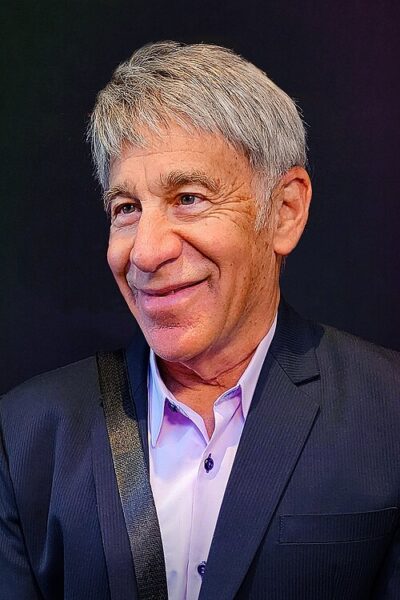
Stephen Schwartz
Stephen Schwartz is an American musical theatre lyricist and composer. Born March 6, 1948, in New York City. Known for The Prince of Egypt. Educated at Juilliard School and Carnegie Mellon University. Awards include Academy Award for Best Original Musical or Comedy Score, Isabelle Stevenson Award and Grammy Award for Best Musical Theater Album.
Facts
27 facts · 1 confirmed by two sources · 4 cited · 22 from one source
Where this comes from
Papalocal keeps its own record. It started from these sources; what each one said is kept here as it was copied, so a change on their side never changes this page by itself. Tap one to read its version.
What Wikidata says · copied November 15, 2026 · revision 2567340605
- Described as
- American musical theatre lyricist and composer
- Other names
- Stephen Lawrence Schwartz
- Born
- March 6, 1948 · 3 references
- Born in
- New York City · 1 reference
- Name at birth
- Stephen Lawrence Schwartz
- Citizen of
- United States
- Occupation
- composer · 1 reference; lyricist; poet; songwriter; screenwriter · 1 reference; executive producer
- Education
- Juilliard School; Carnegie Mellon University; Mineola High School · 1 reference
- Genre
- musical play · 1 reference
- Known for
- The Prince of Egypt
- Awards
- Academy Award for Best Original Musical or Comedy Score (1996) · 1 reference; Isabelle Stevenson Award (2015); Grammy Award for Best Musical Theater Album (2005) · 1 reference; Drama Desk Award for Outstanding Lyrics (2004); Golden Globe Award for Best Original Song (1996); Academy Award for Best Original Song (2 times) (1996, 1999) · 1 reference; Grammy Award for Best Song Written for Visual Media (1996); Broadcast Film Critics Association Award for Best Song (1998); Drama Desk Award for Outstanding Musical (2004); Drama Desk Award for Outstanding Director of a Musical (1978); star on Hollywood Walk of Fame · 1 reference
- Website
- https://www.stephenschwartz.com
- Wikipedias with a page
- 30
Wikidata item Q542484 (wikidata.org/wiki/Q542484), public domain (CC0). Copied November 15, 2026.
What Wikipedia says · copied November 15, 2026 · revision 1377787808
Stephen Lawrence Schwartz (born March 6, 1948) is an American musical theatre composer and lyricist. In a career spanning over five decades, Schwartz has written hit musicals including Godspell (1971), Pippin (1972), and Wicked (2003). He has contributed lyrics to successful films including Pocahontas (1995), The Hunchback of Notre Dame (1996), The Prince of Egypt (1998, music and lyrics), Enchanted (2007), Disenchanted (2022), and the two-part adaptation of Wicked (2024–2025, music and lyrics).
Schwartz has earned numerous accolades including three Grammy Awards, three Academy Awards, and a Golden Globe Award. He has received nominations for six Tony Awards, and a Laurence Olivier Award. He received the Tony Award's Isabelle Stevenson Award in 2015.
His son, Scott, directed The Hunchback of Notre Dame and The Prince of Egypt.
- Born, in its opening lines
- March 6, 1948
From the Wikipedia article “Stephen Schwartz” (en.wikipedia.org/wiki/Stephen_Schwartz), by its contributors, under CC BY-SA 4.0 (creativecommons.org/licenses/by-sa/4.0/). Copied November 15, 2026; not changed.
Confirmed Two sources agree. Cited One source, and it names where it got it. One source One source, without a reference of its own. Sources disagree The sources disagree. We show the best-supported value and keep theirs below.
