
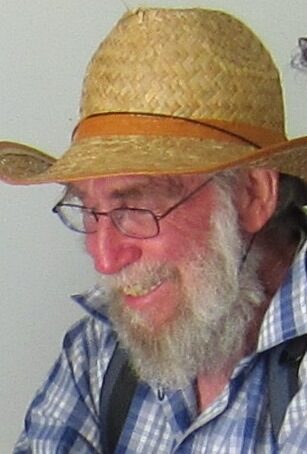
Stephen Wiesner
Stephen Wiesner was an Israeli research physicist. Born August 30, 1942, in United States. Died August 12, 2021, in Jerusalem. Educated at Brandeis University and Columbia University. Awards include Micius Quantum Prize.
Facts
12 facts · 2 confirmed by two sources · 1 cited · 9 from one source
Where this comes from
Papalocal keeps its own record. It started from these sources; what each one said is kept here as it was copied, so a change on their side never changes this page by itself. Tap one to read its version.
What Wikidata says · copied November 18, 2026 · revision 2547224769
- Described as
- Israeli research physicist (1942–2021)
- Other names
- Stephen J. Wiesner
- Born
- August 30, 1942
- Died
- August 12, 2021 · 1 reference
- Born in
- United States
- Died in
- Jerusalem
- Citizen of
- United States
- Occupation
- physicist
- Education
- Brandeis University; Columbia University (–1972) · 1 reference
- Awards
- Micius Quantum Prize (2018)
- Field
- quantum information science
- Father
- Jerome Wiesner
- Lived in
- Israel
- Wikipedias with a page
- 15
Wikidata item Q2115366 (wikidata.org/wiki/Q2115366), public domain (CC0). Copied November 18, 2026.
What Wikipedia says · copied November 18, 2026 · revision 1350616442
Stephen J. Wiesner (1942 – August 12, 2021) was an American-Israeli research physicist, inventor and construction laborer. As a graduate student at Columbia University in New York in the late 1960s and early 1970s, he discovered several of the most important ideas in quantum information theory, including quantum money (which led to quantum key distribution), quantum multiplexing (the earliest example of oblivious transfer) and superdense coding (the first and most basic example of entanglement-assisted communication). Although this work remained unpublished for over a decade, it circulated widely enough in manuscript form to stimulate the emergence of quantum information science in the 1980s and 1990s.
Stephen Wiesner is the son of Jerome Wiesner and Laya Wiesner. He received his undergraduate degree from Brandeis University. In the 1970s, after leaving academia, he worked in many different Silicon Valley startups while also working on weekends at a fruits and vegetable distribution co-op. During this time he became interested in Judaism and in finding solutions for solar energy, clean energy and space migration.
After moving to Israel, in addition to his religious study, Wiesner worked part time in construction and as a surveyor. He continued to work constantly on inventions, ideas and prototypes, mostly related to clean energy, sustainability and space travel. He remained affiliated with the Quantum Foundations & Information Group at Tel Aviv University.
In 2006 he shared the Rank Prize in Optoelectronics with Charles H. Bennett and Gilles Brassard for quantum cryptography. In 2019, he received one of six Micius Quantum Prizes, along with Bennett, Brassard, Artur Ekert, Anton Zeilinger and Pan Jianwei, for quantum communication.
- Born, in its opening lines
- 1942
- Died, in its opening lines
- August 12, 2021
From the Wikipedia article “Stephen Wiesner” (en.wikipedia.org/wiki/Stephen_Wiesner), by its contributors, under CC BY-SA 4.0 (creativecommons.org/licenses/by-sa/4.0/). Copied November 18, 2026; not changed.
Confirmed Two sources agree. Cited One source, and it names where it got it. One source One source, without a reference of its own. Sources disagree The sources disagree. We show the best-supported value and keep theirs below.
