
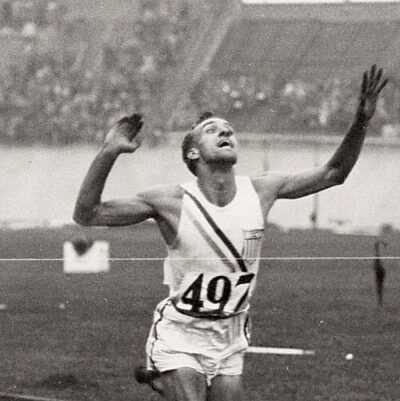
Steve Anderson
Steve Anderson was an American hurdler. Born April 10, 1906, in Portsmouth. Died August 2, 1988, in Seattle. Educated at Queen Anne High School and University of Washington.
Facts
10 facts · 2 confirmed by two sources · 1 cited · 7 from one source
Where this comes from
Papalocal keeps its own record. It started from these sources; what each one said is kept here as it was copied, so a change on their side never changes this page by itself. Tap one to read its version.
What Wikidata says · copied November 18, 2026 · revision 2564936181
- Described as
- American hurdler (1906-1988)
- Other names
- Stephen Eugene Anderson
- Born
- April 10, 1906
- Died
- August 2, 1988
- Born in
- Portsmouth
- Died in
- Seattle
- Citizen of
- United States
- Occupation
- athletics competitor
- Education
- Queen Anne High School; University of Washington · 2 references
- Sport
- athletics
- Height
- 1.90 m (6 ft 3 in) · 1 reference
- Wikipedias with a page
- 17
Wikidata item Q1272620 (wikidata.org/wiki/Q1272620), public domain (CC0). Copied November 18, 2026.
What Wikipedia says · copied November 18, 2026 · revision 1367444243
Stephen Eugene Anderson (April 10, 1906 – August 2, 1988) was an American track and field athlete who competed mainly in the 110 meter hurdles.
He competed for the United States in the 1928 Summer Olympics held in Amsterdam, Netherlands in the 110 metre hurdles where he won the silver medal.
Matched the world record in the 110 metre hurdles at the U.S. Olympic trials in Boston with a time of 14.8 seconds on July 7, 1928.
Competing for the Washington Huskies track and field team, Anderson won multiple NCAA titles in the sprint hurdles.
- Born, in its opening lines
- April 10, 1906
- Died, in its opening lines
- August 2, 1988
From the Wikipedia article “Steve Anderson (hurdler)” (en.wikipedia.org/wiki/Steve_Anderson_(hurdler)), by its contributors, under CC BY-SA 4.0 (creativecommons.org/licenses/by-sa/4.0/). Copied November 18, 2026; not changed.
Confirmed Two sources agree. Cited One source, and it names where it got it. One source One source, without a reference of its own. Sources disagree The sources disagree. We show the best-supported value and keep theirs below.
