
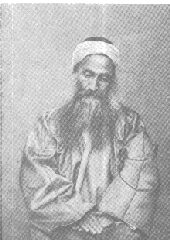
Subh-i-Azal was a Persian religious leader. Born 1831, in Tehran. Died April 29, 1912, in Famagusta.
Facts
11 facts · 2 confirmed by two sources · 1 cited · 8 from one source
Where this comes from
Papalocal keeps its own record. It started from these sources; what each one said is kept here as it was copied, so a change on their side never changes this page by itself. Tap one to read its version.
What Wikidata says · copied November 17, 2026 · revision 2553821771
- Described as
- Persian religious leader (1831–1912)
- Born
- 1831 · 1 reference
- Died
- April 29, 1912 · 1 reference
- Born in
- Tehran
- Died in
- Famagusta · 1 reference
- Citizen of
- Iran
- Occupation
- poet; writer; religious leader · 1 reference
- Father
- Mírzá ʻAbbás Núrí
- Siblings
- Baháʼu'lláh; Mírzá Músá
- Wikipedias with a page
- 24
Wikidata item Q923673 (wikidata.org/wiki/Q923673), public domain (CC0). Copied November 17, 2026.
What Wikipedia says · copied November 17, 2026 · revision 1369330659
Subh-i-Azal (1831–1912), born Mīrzā Yaḥyā Nūrī, was an Iranian Bábí religious figure and writer who was designated by the Báb shortly before the Báb's execution in 1850 as a leading figure in the Bábí community. The nature of this appointment—whether it constituted a full succession, a nominal or protective designation pending the appearance of He whom God shall make manifest, or part of the Báb's broader rejection of formal successorship—has been disputed among scholars.
After the execution of the Báb, Subh-i-Azal was regarded by some Bábís as a point of reference, but his practical leadership was limited by his policy of concealment, the fragmented condition of the Bábí community after the persecutions of 1852–53, and the fact that not all Bábís accepted his authority; some even advanced claims of their own, including claims to the messianic station. During the Baghdad period, many Bábís increasingly turned to his half-brother Baháʼu'lláh for guidance, and Baháʼu'lláh emerged as the community's most visible and influential figure. After the later conflict between the two half-brothers, those Bábís who continued to recognize Subh-i-Azal's authority became known as Azalís.
At the time of appointment in 1850, he was just 19 years old. Two years later, a pogrom began to exterminate the Bábís in Iran, and Subh-i-Azal fled for Baghdad for 10 years before joining the group of Bábí exiles that were called to Istanbul. During the time in Baghdad tensions grew with Baháʼu'lláh, as Bábís began to turn to the latter for leadership. The Ottoman government further exiled the group to Edirne, where Subh-i-Azal openly rejected Baháʼu'lláh's messianic claim and a formal schism developed between Baháʼu'lláh's followers and the smaller group that followed Subh-i-Azal.
In 1868 the Ottoman government further exiled Subh-i-Azal and his followers to Cyprus, and Baháʼu'lláh and his followers to Acre in Palestine. When Cyprus was leased to Britain in 1878, he lived out the rest of his life in obscurity on a British pension.
By 1904, Azal's followers had dwindled to a small minority, and Baháʼu'lláh was almost universally recognized as the spiritual successor of the Báb. After Azal's death in 1912, the Azalí form of Bábism entered a stagnation and has not recovered as there is no acknowledged leader or central organization. Most Bábís either accepted the claim of Baháʼu'lláh or the community gradually diminished as children and grandchildren turned back to Islam. A source in 2001 estimated no more than a few thousand, almost entirely in Iran. Another source in 2009 noted a very small number of followers remained in Uzbekistan.
- Born, in its opening lines
- 1831
- Died, in its opening lines
- 1912
From the Wikipedia article “Subh-i-Azal” (en.wikipedia.org/wiki/Subh-i-Azal), by its contributors, under CC BY-SA 4.0 (creativecommons.org/licenses/by-sa/4.0/). Copied November 17, 2026; not changed.
Confirmed Two sources agree. Cited One source, and it names where it got it. One source One source, without a reference of its own. Sources disagree The sources disagree. We show the best-supported value and keep theirs below.
