
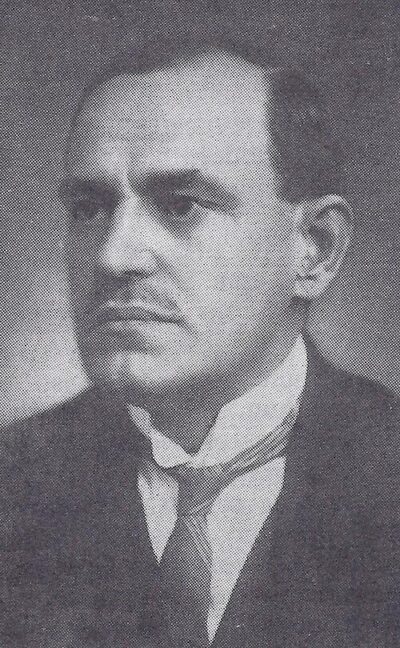
Svetozar Pribićević
Svetozar Pribićević was a Croatian Serb politician. Born October 26, 1875, in Hrvatska Kostajnica. Died September 15, 1936, in Podolí. Educated at University of Zagreb.
Facts
13 facts · 2 confirmed by two sources · 3 cited · 8 from one source
Where this comes from
Papalocal keeps its own record. It started from these sources; what each one said is kept here as it was copied, so a change on their side never changes this page by itself. Tap one to read its version.
What Wikidata says · copied November 18, 2026 · revision 2567409157
- Described as
- Croatian Serb politician (1875–1936)
- Born
- October 26, 1875 · 2 references
- Died
- September 15, 1936 · 3 references
- Born in
- Hrvatska Kostajnica
- Died in
- Podolí · 1 reference
- Citizen of
- Yugoslavia; Austria–Hungary
- Occupation
- politician · 1 reference
- Political party
- Serb People's Independent Party; Democratic Party; Independent Democratic Party
- Education
- University of Zagreb · 1 reference
- Field
- politics · 1 reference
- Children
- Stojan Pribicevic
- Wikipedias with a page
- 20
Wikidata item Q2263774 (wikidata.org/wiki/Q2263774), public domain (CC0). Copied November 18, 2026.
What Wikipedia says · copied November 18, 2026 · revision 1377666710
Svetozar Pribićević (Serbian Cyrillic: Светозар Прибићевић, pronounced [sʋêtozaːr pribǐːt͡ɕeʋit͡ɕ]; 26 October 1875 – 15 September 1936) was a Croatian Serb politician in Austria-Hungary and later the Kingdom of Yugoslavia. He was one of the main proponents of Yugoslavism and a federalized South Slavic state which would later turn out to be Yugoslavia. However, he later became a bitter opponent of the same policy that was promoted by King Alexander I.
- Born, in its opening lines
- October 26, 1875
- Died, in its opening lines
- September 15, 1936
From the Wikipedia article “Svetozar Pribićević” (en.wikipedia.org/wiki/Svetozar_Pribićević), by its contributors, under CC BY-SA 4.0 (creativecommons.org/licenses/by-sa/4.0/). Copied November 18, 2026; not changed.
Confirmed Two sources agree. Cited One source, and it names where it got it. One source One source, without a reference of its own. Sources disagree The sources disagree. We show the best-supported value and keep theirs below.
