
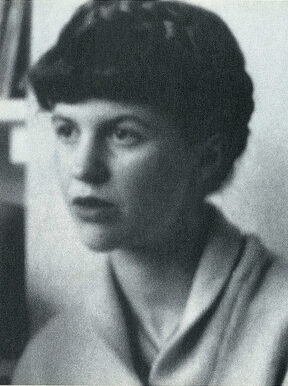
Sylvia Plath
Sylvia Plath was an American poet and writer. Born October 27, 1932, in Jamaica Plain. Died February 11, 1963, in London. Known for The Bell Jar, Ariel and The Colossus. Educated at Smith College and Newnham College. Awards include Pulitzer Prize for Poetry, Glascock Prize and Fulbright Scholarship.
Facts
40 facts · 2 confirmed by two sources · 12 cited · 26 from one source
Where this comes from
Papalocal keeps its own record. It started from these sources; what each one said is kept here as it was copied, so a change on their side never changes this page by itself. Tap one to read its version.
What Wikidata says · copied November 13, 2026 · revision 2567402888
- Described as
- American poet and writer (1932–1963)
- Other names
- Sylvia Plath Hughes, Victoria Lucas
- Born
- October 27, 1932 · 16 references
- Died
- February 11, 1963 · 15 references
- Born in
- Jamaica Plain · 1 reference
- Died in
- London · 2 references
- Buried in
- Heptonstall
- Cause of death
- carbon monoxide poisoning
- Name at birth
- Sylvia Plath
- Citizen of
- United States
- Occupation
- poet · 2 references; writer · 2 references; novelist; essayist; autobiographer; diarist; children's writer; draftsperson · 1 reference
- Worked for
- Smith College · 1 reference
- Education
- Smith College (1950–1955); Newnham College · 1 reference; Wellesley High School
- Genre
- confessional poetry; roman à clef
- Known for
- The Bell Jar; Ariel · 1 reference; The Colossus · 1 reference
- Awards
- Pulitzer Prize for Poetry (1982) · 1 reference; Glascock Prize (1955); Fulbright Scholarship
- Field
- poetry · 1 reference; essay; fiction · 1 reference
- Spouse
- Ted Hughes (1956–1963)
- Children
- Frieda Hughes; Nicholas Hughes
- Father
- Otto Plath
- Mother
- Aurelia Plath
- Siblings
- Warren Joseph Plath · 1 reference
- Religion
- Unitarianism
- Lived in
- London; Court Green (1961–1962) · 2 references
- Wikipedias with a page
- 112
Wikidata item Q133054 (wikidata.org/wiki/Q133054), public domain (CC0). Copied November 13, 2026.
What Wikipedia says · copied November 13, 2026 · revision 1385182208
Sylvia Plath (October 27, 1932 – February 11, 1963) was an American poet and author. She is credited with advancing the genre of confessional poetry and her works include The Colossus and Other Poems (1960), Ariel (1965), and The Bell Jar (1963), a semi-autobiographical novel published one month before her suicide. The Collected Poems were published in 1981, which included previously unpublished works. For this collection Plath was awarded a Pulitzer Prize for Poetry in 1982, making her the fourth person to receive this honor posthumously.
Born in Jamaica Plain, Boston, Massachusetts, Plath graduated from Smith College in Northampton, Massachusetts, and then the University of Cambridge in England, where she was a Fulbright student at Newnham College. In 1959, Plath took a creative writing seminar taught by Robert Lowell at Boston University, alongside poets Anne Sexton and George Starbuck. Within this seminar, Plath, Lowell and Sexton, whilst starting with very different writing styles, each gravitated toward a new style of poetry dubbed confessional for its use of personal experience and its tendency to use a direct form of address. She married fellow poet Ted Hughes in 1956 in London. In 1957, they briefly moved to the United States, but moved back to England in the winter of 1959. They had two children, Frieda and Nicholas, before separating in 1962.
Critic Al Alvarez views Plath as part of a generation that helped establish a new artistic myth, in contrast to the Eliot generation, which championed the impersonality of art and the "extinction of personality". In his view Plath and her contemporaries fused their inner lives with their artistic output. Some in the feminist movement saw Plath as speaking for their experience, as a "symbol of blighted female genius." Plath suffered a lifelong battle with severe depression, often characterized as a bipolar-type illness, leading to multiple traumatic treatments with early model electroconvulsive therapy (ECT). She died by suicide at age 30 in London on February 11, 1963.
- Born, in its opening lines
- October 27, 1932
- Died, in its opening lines
- February 11, 1963
From the Wikipedia article “Sylvia Plath” (en.wikipedia.org/wiki/Sylvia_Plath), by its contributors, under CC BY-SA 4.0 (creativecommons.org/licenses/by-sa/4.0/). Copied November 13, 2026; not changed.
Confirmed Two sources agree. Cited One source, and it names where it got it. One source One source, without a reference of its own. Sources disagree The sources disagree. We show the best-supported value and keep theirs below.
