
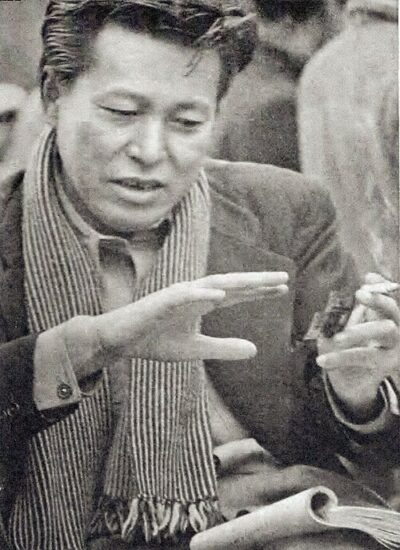
Tadashi Imai
Tadashi Imai was a Japanese film director. Born January 8, 1912, in Tokyo. Died November 22, 1991, in Tokyo. Known for Numazu Military Academy. Educated at Ibaraki University. Awards include Blue Ribbon Awards for Best Director (4 times) and Mainichi Film Award for Best Director.
Facts
12 facts · 2 confirmed by two sources · 0 cited · 9 from one source · 1 where the sources disagree
What’s different
- Died in: we show Tokyo (Sources disagree). Wikidata also lists Sōka-shi
Where this comes from
Papalocal keeps its own record. It started from these sources; what each one said is kept here as it was copied, so a change on their side never changes this page by itself. Tap one to read its version.
What Wikidata says · copied November 17, 2026 · revision 2569432895
- Described as
- Japanese film director (1912–1991)
- Other names
- Imai Tadashi
- Born
- January 8, 1912 · 2 references
- Died
- November 22, 1991 · 3 references
- Born in
- Tokyo
- Died in
- Tokyo; Sōka-shi
- Citizen of
- Japan; Empire of Japan (–1947)
- Occupation
- film director; screenwriter · 1 reference
- Education
- Ibaraki University
- Known for
- Numazu Military Academy
- Awards
- Blue Ribbon Awards for Best Director (4 times) (1951, 1954, 1957, 1958); Mainichi Film Award for Best Director
- Wikipedias with a page
- 26
Wikidata item Q660352 (wikidata.org/wiki/Q660352), public domain (CC0). Copied November 17, 2026.
What Wikipedia says · copied November 17, 2026 · revision 1353201455
Tadashi Imai (今井正, Imai Tadashi; January 8, 1912 – November 22, 1991) was a Japanese film director known for social realist filmmaking informed by a left-wing perspective. His most noted films include An Inlet of Muddy Water (1953) and Bushido, Samurai Saga (1963).
- Born, in its opening lines
- January 8, 1912
- Died, in its opening lines
- November 22, 1991
From the Wikipedia article “Tadashi Imai” (en.wikipedia.org/wiki/Tadashi_Imai), by its contributors, under CC BY-SA 4.0 (creativecommons.org/licenses/by-sa/4.0/). Copied November 17, 2026; not changed.
Confirmed Two sources agree. Cited One source, and it names where it got it. One source One source, without a reference of its own. Sources disagree The sources disagree. We show the best-supported value and keep theirs below.
