
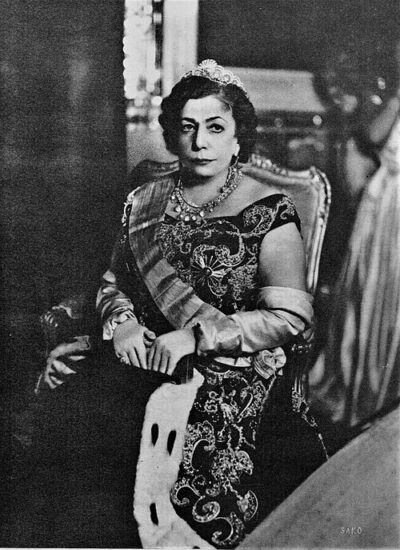
Tadj ol-Molouk of Iran
Tadj ol-Molouk of Iran was a Queen consort of Iran from 1925 to 1941. Born March 17, 1896, in Baku. Died March 10, 1982, in Acapulco de Juárez.
Facts
14 facts · 2 confirmed by two sources · 3 cited · 9 from one source
Where this comes from
Papalocal keeps its own record. It started from these sources; what each one said is kept here as it was copied, so a change on their side never changes this page by itself. Tap one to read its version.
What Wikidata says · copied November 16, 2026 · revision 2557543258
- Described as
- Queen consort of Iran from 1925 to 1941
- Other names
- Tadj ol-Molouk, Tadj ol-Molouk de Irán, Nimtac Ayrımlı
- Born
- March 17, 1896
- Died
- March 10, 1982
- Born in
- Baku
- Died in
- Acapulco de Juárez
- Citizen of
- Iran
- Occupation
- politician
- Spouse
- Reza Shah (1916–1944) · 1 reference
- Children
- Mohammad Reza I of Iran · 1 reference; Prince Ali Reza Pahlavi; Shams Pahlavi · 1 reference; Ashraf Pahlavi · 1 reference
- Father
- Teymūr Khan Ayromlou
- Mother
- Malik Sultan
- Religion
- Shia Islam
- Wikipedias with a page
- 30
Wikidata item Q2339098 (wikidata.org/wiki/Q2339098), public domain (CC0). Copied November 16, 2026.
What Wikipedia says · copied November 16, 2026 · revision 1376468482
Tâdj ol-Molouk (Persian: تاجالملوک; 17 March 1896 – 10 March 1982) was the Queen of Iran and second wife of Reza Shah, the founder of the Pahlavi dynasty and Shah of Iran from 1925 to 1941. The title she was given after becoming queen means "Crown of the Kings" in the Persian language. She was the first queen in Iran after the Muslim conquest in the seventh century to have participated in public royal representation, and she played a major role in the kashf-e hijab (ban of the veil) in 1936.
- Born, in its opening lines
- March 17, 1896
- Died, in its opening lines
- March 10, 1982
From the Wikipedia article “Tadj ol-Molouk” (en.wikipedia.org/wiki/Tadj_ol-Molouk), by its contributors, under CC BY-SA 4.0 (creativecommons.org/licenses/by-sa/4.0/). Copied November 16, 2026; not changed.
Confirmed Two sources agree. Cited One source, and it names where it got it. One source One source, without a reference of its own. Sources disagree The sources disagree. We show the best-supported value and keep theirs below.
