
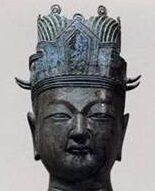
Taejo of Goryeo
Taejo of Goryeo was a founder of the Goryeo Dynasty. Born January 31, 877, in Kaesong. Died July 4, 943, in Kaesong.
Facts
30 facts · 2 confirmed by two sources · 0 cited · 28 from one source
Where this comes from
Papalocal keeps its own record. It started from these sources; what each one said is kept here as it was copied, so a change on their side never changes this page by itself. Tap one to read its version.
What Wikidata says · copied November 16, 2026 · revision 2550485403
- Described as
- founder of the Goryeo Dynasty (877-943)
- Other names
- Wang Kŏn, Wang Kon, T'aejo of Koryŏ, Wang Geon, T'aejo, Taejo
- Born
- January 31, 877
- Died
- July 4, 943
- Born in
- Kaesong
- Died in
- Kaesong
- Buried in
- Tomb of King Wanggon
- Cause of death
- disease
- Citizen of
- Goryeo
- Occupation
- politician
- Spouse
- Sinhye; queen Janghwa; Queen Sinmyeongsunseong; Sinjeong; Sinseong; Jeongdeok
- Children
- Hyejong of Goryeo; Jeongjong; Gwangjong of Goryeo; Wang Jung; Wonjang taeja; Hyoeun taeja; Nakrang; Queen Daemok; Munhyoe wanghu; Jeungtong guksa; Heungbang; Daejong
- Father
- Wang Ryung
- Mother
- Wisuk
- Religion
- Buddhism
- Military rank
- army general
- Wikipedias with a page
- 40
Wikidata item Q334312 (wikidata.org/wiki/Q334312), public domain (CC0). Copied November 16, 2026.
What Wikipedia says · copied November 16, 2026 · revision 1375660444
Taejo (Korean: 태조; Hanja: 太祖; 31 January 877 – 4 July 943), personal name Wang Kŏn (왕건; 王建), also known as Taejo Wang Kŏn (태조 왕건; 太祖 王建; lit. ''Great Progenitor Wang Kŏn''), was the founder of the Goryeo Dynasty of Korea. He ruled from 918 to 943, achieving unification of the Later Three Kingdoms in 936.
- Born, in its opening lines
- January 31, 877
- Died, in its opening lines
- July 4, 943
From the Wikipedia article “Taejo of Goryeo” (en.wikipedia.org/wiki/Taejo_of_Goryeo), by its contributors, under CC BY-SA 4.0 (creativecommons.org/licenses/by-sa/4.0/). Copied November 16, 2026; not changed.
Confirmed Two sources agree. Cited One source, and it names where it got it. One source One source, without a reference of its own. Sources disagree The sources disagree. We show the best-supported value and keep theirs below.
