
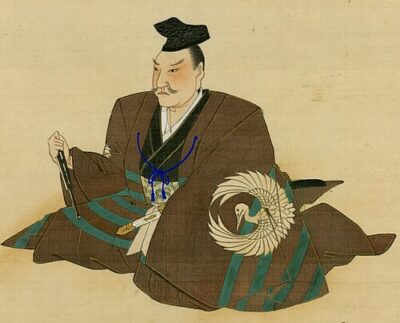
Takakazu Seki
Takakazu Seki was a Japanese mathematician. Born 1642, in Fujioka. Died December 5, 1708, in Edo. Known for Taisei Sankei.
Facts
11 facts · 2 confirmed by two sources · 4 cited · 5 from one source
Where this comes from
Papalocal keeps its own record. It started from these sources; what each one said is kept here as it was copied, so a change on their side never changes this page by itself. Tap one to read its version.
What Wikidata says · copied November 16, 2026 · revision 2568280352
- Described as
- Japanese mathematician
- Other names
- Seki Kōwa
- Born
- 1642 · 3 references
- Died
- December 5, 1708 · 1 reference
- Born in
- Fujioka · 1 reference
- Died in
- Edo · 1 reference
- Buried in
- Jorinji temple
- Citizen of
- Japan
- Occupation
- mathematician · 1 reference
- Worked for
- Kōfu Domain; Tokugawa shogunate (1695–) · 1 reference
- Known for
- Taisei Sankei
- Lived in
- Japan · 1 reference
- Wikipedias with a page
- 37
Wikidata item Q470531 (wikidata.org/wiki/Q470531), public domain (CC0). Copied November 16, 2026.
What Wikipedia says · copied November 16, 2026 · revision 1375873120
Seki Takakazu (関 孝和; c. March 1642 – December 5, 1708), also known as Seki Kōwa (関 孝和), was a mathematician, samurai, and Kofu feudal officer of the early Edo period of Japan.
Seki laid foundations for the subsequent development of Japanese mathematics, known as wasan from c. 1870. He has been described as "Japan's Newton".
He created a new algebraic notation system and, motivated by astronomical computations, did work on Infinitesimal, Infinite series and Diophantine equations. His successors later developed a school dominant in Japanese mathematics until the end of the Edo period.
While it is not clear how much of the achievements of wasan are Seki's, since many of them appear only in writings of his pupils, some of the results parallel or anticipate those discovered in Europe. For example, he is credited with the discovery of Bernoulli numbers. The resultant and determinant (the first in 1683, the complete version no later than 1710) are attributed to him.
Seki also calculated the value of pi correct to the 10th decimal place, having used what is now called the Aitken's delta-squared process, rediscovered later by Alexander Aitken.
Seki was influenced by Japanese mathematics books such as the Jinkōki.
- Born, in its opening lines
- March 1642
- Died, in its opening lines
- December 5, 1708
From the Wikipedia article “Seki Takakazu” (en.wikipedia.org/wiki/Seki_Takakazu), by its contributors, under CC BY-SA 4.0 (creativecommons.org/licenses/by-sa/4.0/). Copied November 16, 2026; not changed.
Confirmed Two sources agree. Cited One source, and it names where it got it. One source One source, without a reference of its own. Sources disagree The sources disagree. We show the best-supported value and keep theirs below.
