
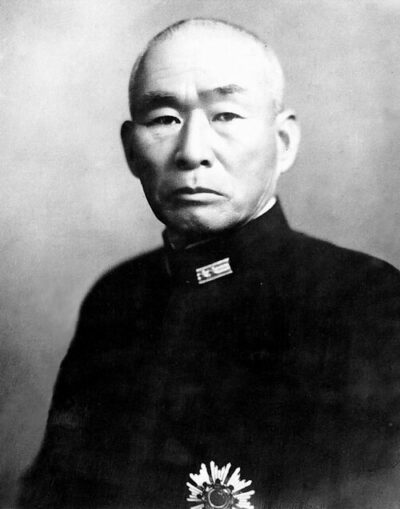
Takeo Kurita was a Japanese admiral. Born April 28, 1889, in Mito. Died December 19, 1977, in Nishinomiya. Educated at Naval War College and Imperial Japanese Naval Academy. Awards include Order of the Rising Sun, 1st class.
Facts
14 facts · 2 confirmed by two sources · 0 cited · 12 from one source
Where this comes from
Papalocal keeps its own record. It started from these sources; what each one said is kept here as it was copied, so a change on their side never changes this page by itself. Tap one to read its version.
What Wikidata says · copied November 17, 2026 · revision 2531165198
- Described as
- Japanese admiral
- Born
- April 28, 1889 · 2 references
- Died
- December 19, 1977 · 2 references
- Born in
- Mito
- Died in
- Nishinomiya
- Buried in
- Tama Cemetery
- Citizen of
- Japan; Empire of Japan (–1947)
- Occupation
- military officer
- Worked for
- Imperial Japanese Naval Academy
- Education
- Naval War College; Imperial Japanese Naval Academy
- Awards
- Order of the Rising Sun, 1st class
- Military branch
- Imperial Japanese Navy · 1 reference
- Military rank
- admiral
- Wikipedias with a page
- 26
Wikidata item Q187698 (wikidata.org/wiki/Q187698), public domain (CC0). Copied November 17, 2026.
What Wikipedia says · copied November 17, 2026 · revision 1379822297
Takeo Kurita (Japanese: 栗田 健男, Hepburn: Kurita Takeo; 28 April 1889 – 19 December 1977) was a vice admiral in the Imperial Japanese Navy (IJN) during World War II. Kurita commanded IJN 2nd Fleet, the main Japanese attack force during the Battle of Leyte Gulf, the largest naval battle in history.
- Born, in its opening lines
- April 28, 1889
- Died, in its opening lines
- December 19, 1977
From the Wikipedia article “Takeo Kurita” (en.wikipedia.org/wiki/Takeo_Kurita), by its contributors, under CC BY-SA 4.0 (creativecommons.org/licenses/by-sa/4.0/). Copied November 17, 2026; not changed.
Confirmed Two sources agree. Cited One source, and it names where it got it. One source One source, without a reference of its own. Sources disagree The sources disagree. We show the best-supported value and keep theirs below.
