
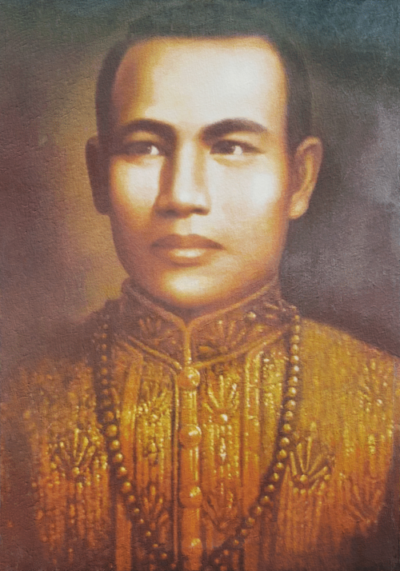
Taksin
Taksin was a King of Siam. Born April 17, 1734, in Phra Nakhon Si Ayutthaya. Died April 7, 1782, in Thon Buri. Positions held include King of Thailand (1767–1782).
Facts
20 facts · 2 confirmed by two sources · 0 cited · 18 from one source
Where this comes from
Papalocal keeps its own record. It started from these sources; what each one said is kept here as it was copied, so a change on their side never changes this page by itself. Tap one to read its version.
What Wikidata says · copied November 16, 2026 · revision 2567609391
- Described as
- King of Siam
- Other names
- King of Thailand, King Taksin, King Krung Thonburi, King Boromracha 4, Phra Choa Taksin, Phrachoa Tak, Phrachpa Taksin Maharaja, Taksin The Great, Phraya Tak, Phrabat Somdej Phrachoa Taksin Maharaja, Phraya Krung Thonburi, Somdej Phrachoa Taksin
- Born
- April 17, 1734 · 1 reference
- Died
- April 7, 1782
- Born in
- Phra Nakhon Si Ayutthaya
- Died in
- Thon Buri
- Cause of death
- decapitation
- Citizen of
- Thailand
- Occupation
- sovereign; poet
- Positions held
- King of Thailand (1767–1782)
- Spouse
- Krom Brija Phakdi Srisudarak; Bat Boricha; Prathum
- Children
- Inthra Phithak; Phraphong Narin; Práin À-pai; Narendra Racha
- Father
- Yong Saetae
- Mother
- Phithak Thephamat
- Religion
- Buddhism
- Military rank
- general
- Wikipedias with a page
- 47
Wikidata item Q320097 (wikidata.org/wiki/Q320097), public domain (CC0). Copied November 16, 2026.
What Wikipedia says · copied November 16, 2026 · revision 1380103810
Taksin the Great or the King of Thonburi (17 April 1734 – 7 April 1782) was a Thai Chinese general who became the only King of Thonburi that ruled Siam from 1767 to 1782.
Taksin had been an aristocrat in the Ayutthaya Kingdom and then was a major leader during the liberation of Siam from Burmese occupation after the Second Fall of Ayutthaya in 1767, and the subsequent unification of Siam after it fell under various warlords. He established the city of Thonburi as the new capital, as the city of Ayutthaya had been almost completely destroyed by the invaders. His reign was characterized by numerous wars; he fought to repel new Burmese invasions and to subjugate the northern Thai kingdom of Lanna, the Laotian principalities, and threatening Cambodia.
Although warfare occupied most of Taksin's reign, he paid a great deal of attention to politics, administration, economy, and the welfare of the country. He promoted trade and fostered relations with foreign countries. He had roads built and canals dug. Apart from restoring and renovating temples, the king attempted to revive literature, and various branches of the arts such as drama, painting, architecture and handicrafts. He also issued regulations for the collection and arrangement of various texts to promote education and religious studies.
He was taken in a coup d'état and executed in 1782, and succeeded by his long-time friend Maha Ksatriyaseuk, who then assumed the throne, founding the Rattanakosin Kingdom and the Chakri dynasty, which has since ruled Thailand. In recognition for his deeds, he was later awarded the title of Maharat (the Great).
- Born, in its opening lines
- April 17, 1734
- Died, in its opening lines
- April 7, 1782
From the Wikipedia article “Taksin” (en.wikipedia.org/wiki/Taksin), by its contributors, under CC BY-SA 4.0 (creativecommons.org/licenses/by-sa/4.0/). Copied November 16, 2026; not changed.
Confirmed Two sources agree. Cited One source, and it names where it got it. One source One source, without a reference of its own. Sources disagree The sources disagree. We show the best-supported value and keep theirs below.
