
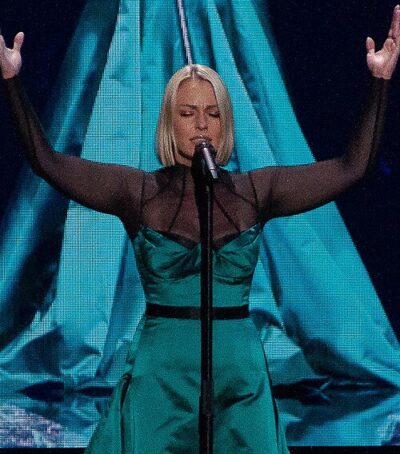
Tamara Todevska is a Macedonian singer. Born June 1, 1985, in Skopje.
Facts
7 facts · 1 confirmed by two sources · 2 cited · 4 from one source
Where this comes from
Papalocal keeps its own record. It started from these sources; what each one said is kept here as it was copied, so a change on their side never changes this page by itself. Tap one to read its version.
What Wikidata says · copied November 16, 2026 · revision 2567230401
- Described as
- Macedonian singer
- Born
- June 1, 1985
- Born in
- Skopje · 1 reference
- Citizen of
- North Macedonia
- Occupation
- singer · 1 reference
- Genre
- pop music
- Instrument
- voice
- Siblings
- Tijana Todevska-Dapčević
- Wikipedias with a page
- 41
Wikidata item Q292310 (wikidata.org/wiki/Q292310), public domain (CC0). Copied November 16, 2026.
What Wikipedia says · copied November 16, 2026 · revision 1382651288
Tamara Todevska (Macedonian: Тамара Тодевска, pronounced [ˈtamara ˈtɔdɛvska] , born 1 June 1985), known professionally as Tamara, is a Macedonian singer. She has represented North Macedonia in the Eurovision Song Contest on two occasions; in 2008, she performed the song "Let Me Love You" with Vrčak and Adrian Gaxha and failed to qualify for the final, performing, and in 2019, she placed seventh in the final with the song "Proud" and winning the jury vote, earning North Macedonia its best-ever result in the contest.
Tamara began her music career in 2003 following the release of her debut studio album Sino. She has won on various music competitions throughout her career such as MAKFest in 2006 and Skopje Fest in 2007.
Todevska is the younger sister of singer Tijana Dapčević, and they have collaborated several times.
- Born, in its opening lines
- June 1, 1985
From the Wikipedia article “Tamara Todevska” (en.wikipedia.org/wiki/Tamara_Todevska), by its contributors, under CC BY-SA 4.0 (creativecommons.org/licenses/by-sa/4.0/). Copied November 16, 2026; not changed.
Confirmed Two sources agree. Cited One source, and it names where it got it. One source One source, without a reference of its own. Sources disagree The sources disagree. We show the best-supported value and keep theirs below.
