
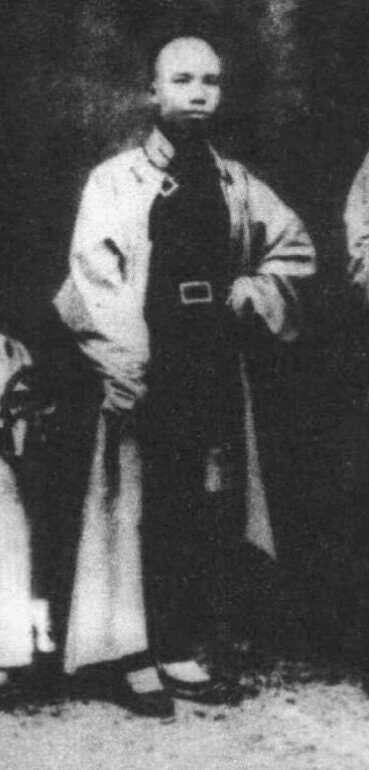
Tan Sitong
Tan Sitong was a Chinese philosopher. Born March 10, 1865, in Beijing. Died September 28, 1898, in Beijing.
Facts
13 facts · 2 confirmed by two sources · 0 cited · 11 from one source
Where this comes from
Papalocal keeps its own record. It started from these sources; what each one said is kept here as it was copied, so a change on their side never changes this page by itself. Tap one to read its version.
What Wikidata says · copied November 17, 2026 · revision 2554177878
- Described as
- Chinese philosopher (1865-1898)
- Other names
- Fusheng, Donghaiqianmingshi, Zhuangfeilou, Qiuyunianhuazhiguan, Siweiyixiongmintai, Liaotianyige, Cunbicenlou, Tongmeisheng, Tongmeibiechu, Shijuyinglu, Chutianliangyulou, Mangcangcangzhai
- Born
- March 10, 1865 · 1 reference
- Died
- September 28, 1898 · 1 reference
- Born in
- Beijing
- Died in
- Beijing
- Cause of death
- decapitation
- Citizen of
- Qing dynasty
- Occupation
- politician; philosopher; writer; journalist; poet · 1 reference
- Spouse
- Li Run
- Father
- Tan Jixun
- Wikipedias with a page
- 27
Wikidata item Q1191225 (wikidata.org/wiki/Q1191225), public domain (CC0). Copied November 17, 2026.
What Wikipedia says · copied November 17, 2026 · revision 1365303427
Tan Sitong (simplified Chinese: 谭嗣同; traditional Chinese: 譚嗣同; pinyin: Tán Sìtóng; Wade–Giles: T'an² Ssu⁴-T'ung², March 10, 1865 – September 28, 1898), courtesy name Fusheng (復生), art name Zhuangfei (壯飛), was a Chinese politician, thinker, and reformist of the late Qing dynasty. He was executed at the age of 33 when the Hundred Days' Reform failed in 1898. Tan Sitong was one of the six gentlemen of the Hundred Days' Reform, and occupies an important place in modern Chinese history. To many contemporaries, his execution symbolized the political failure of the Qing dynasty's reformation, helping to persuade the intellectual class to pursue violent revolution and overthrow the Qing dynasty.
- Born, in its opening lines
- March 10, 1865
- Died, in its opening lines
- September 28, 1898
From the Wikipedia article “Tan Sitong” (en.wikipedia.org/wiki/Tan_Sitong), by its contributors, under CC BY-SA 4.0 (creativecommons.org/licenses/by-sa/4.0/). Copied November 17, 2026; not changed.
Confirmed Two sources agree. Cited One source, and it names where it got it. One source One source, without a reference of its own. Sources disagree The sources disagree. We show the best-supported value and keep theirs below.
